Why a passage works at a slow tempo but not a fast tempo, and how to practise it slowly with the fast tempo in mind
The passage is secure at a slow tempo and unreliable at tempo. That is not unusual. A fast tempo shows the inconsistencies a slow tempo hides.
When a passage works at a slow tempo but not at a fast tempo, mostly the preparation comes late. Slowly, the hand still has time to correct itself on the way. At tempo that time is gone.
When I practise slowly, I work with the same intention as if I would play it fast. I always keep in mind that eventually I have to play it fast. Therefore I keep the divisions (the groups of notes), the active speed of the fingers and the arm movements also in the slow tempo.
So practise slowly with quick finger movement until the preparation comes early, then raise the tempo one step at a time.
Slowly it works every time; at tempo it misses in a different place each run
You play it slowly and every note is where it should be, run after run. Then you take it to tempo. One run it goes wrong near the start, the next run near the end.
Because it moves around, it looks like bad luck, and the usual instinct is to play it faster, more often, until it holds. More runs at tempo will not solve this.
At a slow tempo, the hand corrects a late preparation on the way
At a slow tempo there is still time. Even if the preparation comes late, the hand corrects itself on the way, and it survives more or less. Mostly you don't even notice that repair.
The finger arrives a little late, the hand adjusts, and the note still comes in time. You play it ten times without a miss and think it is ready, but what you practised slowly has a repair in it.
At tempo that time is gone, and what was not prepared stays behind
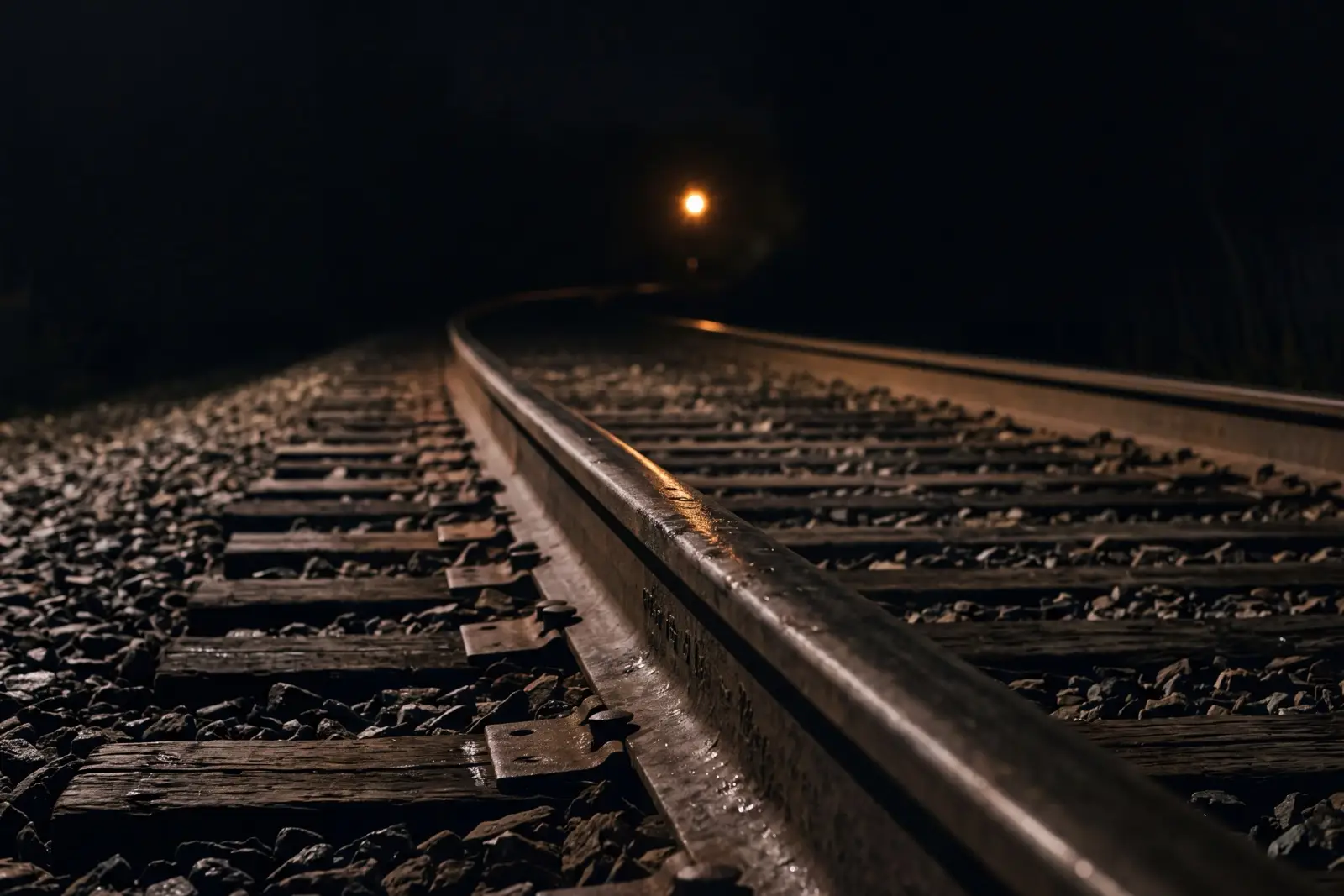
Playing a passage at tempo is like a train leaving: whatever is not inside stays behind.
At tempo that time is gone.
Whatever was not prepared is hard to be repaired during the passage. The next note is already coming, and the hand has hardly any room left to correct itself. So the late preparation you hear at tempo was already there slowly, and the slow tempo hid it.
What is mostly incomplete: the hand position, or fingers still searching while they play
When a passage holds slowly and not at tempo, I look at the preparation first. Mostly the preparation is incomplete: the hand position didn't change where it should, or the fingers are still searching while they play.
With the hand position, the passage needed a new position at some point, and the hand didn't change there. Slowly, it still catches up in time. At tempo there is no time for that.
With searching fingers, the finger finds its key while it is already playing, instead of being placed before it plays. At a slow tempo you hardly hear the searching. At tempo you do.
What a prepared finger is, already organised in shape before the notes are played, I describe in my post on prepared fingers in piano technique. Other things can play a part at tempo too, but these two are the ones I see most.
Slow practice with quick finger movement is where the preparation gets trained
And here is why good slow practice is not safe practice. The tempo stays slow while the finger movement stays quick — that is where the preparation gets trained. I go further into what the fingers do in good slow practice in my post on slow practice in piano technique.
Each finger strikes fast, and the next note still comes slowly. Without preparation you cannot strike fast, so the quick finger movement asks every finger to be ready before it plays. And at the slow tempo you have the time to feel whether it was.
Slow tempo with slow finger movement is something else. It trains a different, slower motion, and that one you have to unlearn later. In good slow practice only the tempo is slow: you already play in the divisions, with the finger speed and the arm movements that the fast tempo will ask for.
Try this: slowly and hands separate, then one tempo step at a time, with the preparation early
Take the passage that holds slowly and not at tempo, and go through these steps in this order.
- Find the group of notes, or the part of the passage, where it turns unreliable.
- Play it slowly, hands separate, striking each finger fast.
- Watch whether the finger is placed before it plays, or on the way.
- Check the hand position: prepared, or searching?
- Raise the tempo one step, keeping the preparation early.
- Drop back when the hand starts repairing again.
Step one asks for a group of notes on purpose. Single notes are very hard to find by ear, especially for beginners, and what turns unreliable at tempo is often a group anyway.
Hands separate, so you can really feel what you are doing. That is the first phase: slow tempo, the fingers striking fast, and your attention on the preparation. Hands together comes later, still in the slow tempo, and that is already the second phase, where you also think about the arm movements.
Step six is the tempo rule. When the hand starts repairing again, the preparation is coming late again, so go back one step, to the tempo where it was early, and work there.
What raising the tempo is for
There is one catch in step five. Raising the tempo tells you where it fails. It does not fix what it shows.
Many students go up step after step and hope it settles by itself. The tempo step has a real job: it shows you where the preparation is still late. The fixing happens back at a slower tempo, with quick finger movement, in that group of notes.
In short
A slow tempo leaves time to repair a late preparation, and at tempo that time is gone. So prepare earlier in that group of notes: slowly, hands separate, with quick finger movement. Then build the tempo back one step at a time, and drop back when the hand starts repairing.
Where this is built
As long as a passage only holds slowly, the piece stays unfinished. In the Academy the tempo is built in steps, from first-phase preparation work.
Decide which passage you want reliable at tempo. Bring it to me.