How to Play Octaves Without Tension
Octaves get stuck where tension builds. To play octaves on piano without tension, I start with the stretch, and then I work in divisions.
Many students start to lock the wrist because of the stretch in the hand. In a few bars you may hardly notice it. Over a whole page it adds up, octave after octave.
In a live lesson I had just played some octaves for a student, and I said: "If you make it here tension. Then you will get stuck there in the octaves." The answer came straight away. In college, the student had avoided Rachmaninoff's Prelude in G minor, Op. 23 No. 5, because of the octaves.
Where to Hold the Octave Stretch
The stretch of the octave is there either way. The question is where you hold it. I feel the stretch inside my lower arm.
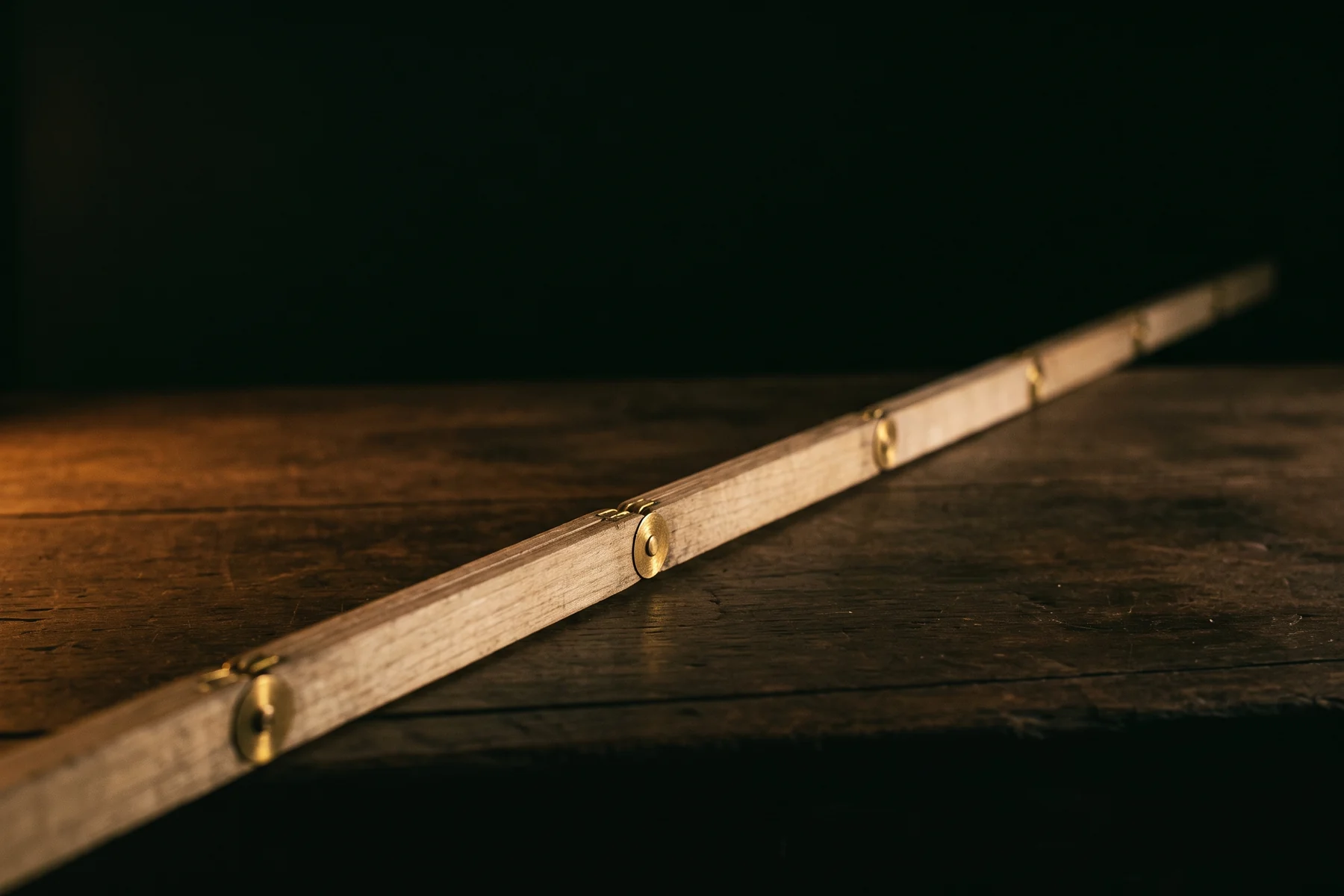
There is a reason for that. Many of the muscles that move the fingers are in the lower arm. In that same lesson I compared it to a wooden doll on strings: "we have strings. From the fingers go to the muscles." When you stretch the hand, "you pull the strings. So there is more tension on the strings when you're stretching."
Hold the stretch in the wrist, and you get tired, the sound turns flat and heavy. So we try to put the tension away from the wrist, into the lower arm. The wrist stays level and free.
The arm sits a little higher, so the hand can hang from it, but not so high that you tighten up. Forearm and back of the hand make one line.
In the beginning you have to think it there. That takes attention for a while. Then, eventually: "Ah, now it's I feel the stretch in the right place."
Octave Technique and Arm Movement
Some people think extra movement costs extra energy. It's not true. It costs a lot of effort to keep everything still, and it's unnatural. It's not the way the body works.
Everyone who knows physics knows that sometimes you need to make a momentum, to give more energy after that. And this works the same in piano playing. In octaves the movement comes from the lower arm, and the wrist follows, free.
Look at Arturo Benedetti Michelangeli. There was a period where he tried to do everything as minimal as he could. He made it almost to a sport. But he first made the movements, and did them correct, and then made them the smallest possible that they're still effective.
Later in his life he came back from this. In his very beautiful recording of the Brahms Ballades, Op. 10, you see larger arm movements again.
How to Practise Octaves in Divisions
In a page full of octaves you have to be able to play it without tiring yourself. So you use arm movements and divisions together.
When you play slowly, there is a small relaxation in the arm between the notes. When you play fast, certain notes go together with one movement, and we walk on them first in divisions.
You will not play a whole line of octaves without moments of relaxation in between. They are split seconds. Learn them in a slow tempo first: relax your muscles without losing the shape and form of your hand. Then you go to the next.
In Super Fingers, working slowly on stretches, I put it like this: "you cannot say you're completely relaxed when you play octaves with such a stretch, but there's a relaxation between each note, that is the secret." So there is tension in an octave, a tension that still feels natural.
In the same lesson I say: "If you know how to relax and every time take this little new energy and relax a little bit in between, you can play six, seven, eight hours at the piano and don't get tired." And the other way round: "you can get tired in the hands in ten minutes if you keep tension, never relax."
Long octave passages still cost effort. With a free wrist, far less.
For fast finger passages I wrote out why a long passage tires you, and where working in divisions comes in. In octaves the divisions are there too, with the stretch on top.
Chopin's Octave Étude
Take Chopin's Étude Op. 25 No. 10 in B minor, the octave étude. Famously difficult, and they need to be played legato, which makes it even more difficult — 5 and 4, the 4 on the black keys (sometimes even 3 if you can).
I never have a problem with that, because I don't lock my wrist and I find my divisions: every 3, 4, sometimes 6 notes. New energy for the next. Then it becomes very doable.
These divisions are mine. Composers, of course, don't write the arm movements in the score. You find them at the piano, and then you can walk.
Try this
Take an octave passage from your piece, and find the place where the hand starts to tire.
- In that place, hold the octave shape and feel where the stretch sits.
- Play the thumb alone, creeping at the black-key edge.
- Play the top voice alone, 5–4 legato, hand open in the octave shape.
- Divide the line in groups of 3 or 4, relaxing between them.
- Then play both together from the lower arm, slowly.
With small hands, 1–5 is fine, even in this étude. Glide from a black key to a white one, and glide up too — no jumping up to the black key. Make them quasi legato, and with the pedal it sounds legato enough.
I go through how a small hand plays real octaves, struck together and connected step by step in its own post.
What to Listen For
Some of these you hear, and some you feel.
- Does the last line of the page still sound full, like the first?
- Does each new division start with new energy, or with what is left of the last one?
- Does the top voice sing as a line, from 5 to 4?
- Is the thumb line even underneath?
- Without pedal, is the line already connected, before the pedal helps?
In short
Start with one octave: where does the stretch pull? Once it sits in the lower arm and the wrist is free, look for the groups of octaves that belong together in one arm movement. Practise the split second of relaxation between them slowly, with the hand still shaped for the octave.
Octaves and Big Chords
It shows up in big chords as well. There, too, we need to be more or less free in the wrist.
In the Academy, passages are worked in divisions. In Super Fingers this is second-phase work: we work in the divisions first, slowly, and then walk them, still relaxing in between each division.
Let's get your octaves to the last bar.