Why Chasing the Target Tempo Backfires
Most students approach speed like a destination they need to reach directly.
They take the target tempo — the speed written in the score, or the speed they hear in a recording —
and they practise at that tempo,
over and over,
hoping it will eventually stick.
The problem is simple. If the passage is not yet ready for that tempo, the hands are not learning the passage at speed. They are learning inaccuracies at speed.
A finger that did not quite prepare. An arm that locked for a half-second. A phrase that lost its line in the middle. Every repetition at the unready tempo reinforces those flaws, because that is what is actually happening under the hands.
This is why the chase fails. It is not a question of effort, or talent, or "needing more reps." The mechanism is wrong from the first note. You cannot build piano speed by rehearsing a faster version of something that is not yet under control at a slower one.
Speed does not grow that way.
What "Under Control" Actually Means
Before the method makes sense, the word control has to mean something specific.
Control is not "I can get through it." Control is not "it sounds roughly right." Control is four distinct sensations, present at the same time, that you can actually feel while you play.
One: the hand shape is clear. The fingers are concentrated — curved, structurally engaged, ready. You can feel which finger is doing what. The hand is not collapsing under the tempo.
Two: the arm is moving exactly as intended. The lower arm follows the line, supports the fingers, releases between gestures. Nothing is locked. Nothing is dragging.
Three: you can think ahead. Not just track the note you are on — actually anticipate the next one, and the shape of the phrase coming after it. If the tempo has stolen your forward attention, the tempo is too fast.
Four: the sound is present and intentional. Each note is a sound you chose, not a sound that happened. The tone is grounded. The line has direction.
When all four are present, the tempo is under control. When one is missing, it is not — even if the passage "works" on the surface.
This is also why slow practice with fast finger movement is the partner skill to controlled tempo work. Slow tempo gives the fingers the room to move crisply rather than lazily — and crisp slow movement is what makes a controlled tempo actually controlled, instead of just slow.
The Stack Method: Speed as Stacked Floors
Speed builds in layers.
The Stack Method is the name for this. You begin at the tempo where every aspect is under full control — all four sensations present, none of them slipping. Not comfortable. Under control.
At that tempo, everything works. The hand shape is clear, the arm moves freely, you think ahead, the sound is intentional.
That tempo becomes the first floor.
Then you raise the tempo incrementally — one small step. Five, maybe ten BPM. You play at the new tempo and ask the same question: are all four sensations still present?
If yes: you consolidate. You play it several more times at this new tempo until it is stable — not a single lucky pass, but a tempo your hands now own.
That is the second floor.
The target tempo is not a practice tempo. It is the result of many controlled practice tempos stacked on each other. Each floor is built on the one below it. The passage at speed is the top floor — but it only stands because the floors beneath it are solid.
This is what the chase misses. Chasing the target tempo is trying to build the top floor with nothing underneath it. The Stack Method builds piano speed gradually, floor by floor, so when you arrive at the top there is something holding it up.
How to Raise the Tempo Without Losing the Floor
There are three rules for how the stack actually gets built. Each one matters, and skipping any of them is how the method quietly stops working.
The increment rule. Raise the tempo by a small step. Not a leap. Five to ten BPM is usually right. If the jump is too large, you are not building the next floor — you are trying to skip a floor, which is the chase again, just in miniature.
The consolidation rule. When a new tempo works, do not move on immediately. Play it several more times until it is stable. One clean pass is a coincidence. Several clean passes in a row is a floor. The consolidation is what makes the next step possible.
The step-back rule. If the new tempo breaks — if any of the four sensations slips — return one step. Do not push through. Do not "try it again and see." Return to the previous secure tempo, play it cleanly several more times, and then attempt the small increment again.
This is the part most students resist. Going back feels like losing ground. It is the opposite. The floor you just returned to is the floor the next attempt will stand on. Skipping the return is how the whole stack starts to wobble two tempos later.
This incremental tempo practice is slower in the moment and far faster in the long run. The passage that was built this way arrives at speed available — not hopeful.
What Goes Wrong — and How to Read the Break
When a tempo breaks, the question is not "should I try harder." The question is what specifically broke. The break is information.
Take a concrete example. You are working on a short five-finger pattern in the right hand — say a quick figure that turns at the top and comes back down. At your current secure tempo, all four sensations are present: clear hand shape, free arm, forward thinking, intentional sound.
You raise the tempo five BPM. The figure goes through, but something is off. The descending half feels slightly muddy.
The temptation is to play it again, faster, and hope it cleans up. Do not. Stop and read the break.
Was it the finger? A finger that did not quite prepare — that arrived at its key half a beat late, so the note sounded blurred into the previous one — is the most common break under a small tempo increase. The fix is not more tempo. It is returning one step and rebuilding the preparation at the secure tempo.
Why that late preparation went unnoticed at the slower tempo, and how slow practice with quick finger movement rebuilds it, I explain in my post on why a passage works at a slow tempo but not a fast tempo.
Was it the arm? An arm that locked at the turn — that stopped following the line and held tension into the descent — produces exactly that muddy feeling. The fix is to return one step and feel the lower arm stay free across the turning point.
Was it the line? A phrase that lost its musical direction — where you stopped thinking ahead and started just playing notes — also breaks the descent, but for a different reason. The fix is to return one step and rebuild the forward attention.
One worked example like this teaches the diagnostic move better than any abstract description. The break has a cause. The cause is one of the four sensations slipping. Naming which one is what makes the return productive instead of mechanical.
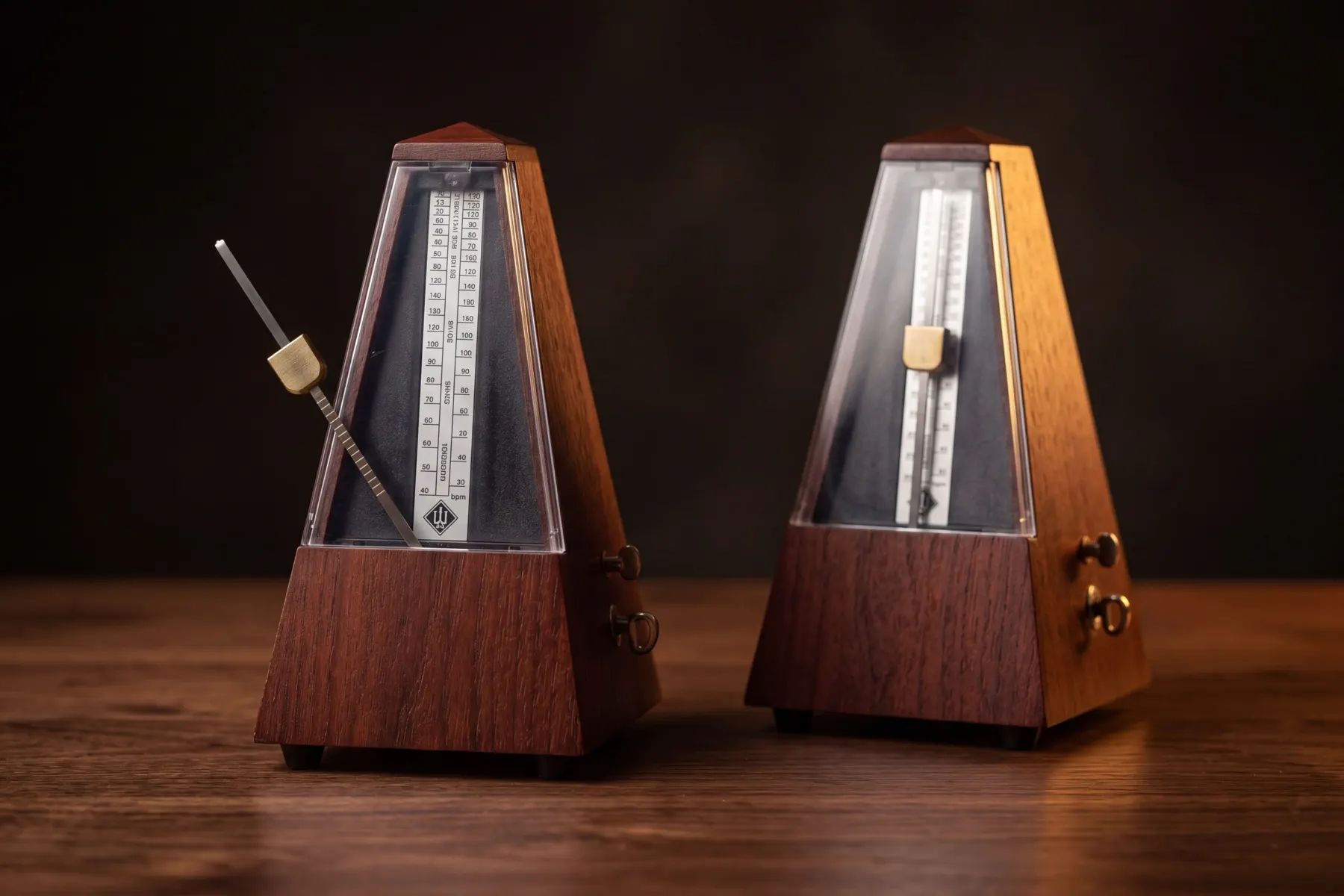
This is the same diagnostic logic behind using a metronome as a tool to find where the passage breaks under a small tempo increase — the metronome is not pushing you faster; it is showing you precisely where the next floor is not yet built.
Try This: A Practice Session Built the Stack Way
Take a passage you are working on — a short one, eight to sixteen bars is plenty. A scale fragment, a five-finger figure, or a small phrase from your current piece.
- Find the maximum tempo where you have full control of hand shape, arm movement, forward thinking, and intentional sound.
- Consolidate it: play it several times clearly at that tempo until it is stable.
- Raise the tempo by a small increment — perhaps 5–10 BPM.
- If it holds: stay at this new level and repeat it several more times before raising again.
- If it breaks: notice what went wrong — finger, arm, thinking, or sound — and return to the previous tempo.
- Play the previous tempo again with extra attention on the place that broke.
- Make small adjustments as you repeat, until that spot feels solid and grounded.
- Then try the small increment again.
- Repeat this process gradually, one floor at a time.
What you will notice, when you reach the target tempo this way:
the passage does not fall apart under pressure or fatigue.
It stays together because the foundation was never rushed.
Raising the tempo is an important step — it is what makes weak spots visible. But it only works if you stay attentive: if you feel and listen to each phrase, each note, each transition.
In short
Speed is not forced. It is built.
Each practice tempo is a secure floor for the next one. When you build this way, the passage is genuinely available at speed — not a lucky accident, but something that stays under control.
Where this is built step by step
The Stack Method is how every technique inside the Piano Fantasy Academy is developed — secure at one level, then the next, then the next. No shortcuts. No guessing. Speed grows out of stacked controlled tempos rather than being chased directly.
You can keep experimenting on your own, or follow a clear path that builds piano speed step by step.