Create an Amazing Piano Sound — Easily
In this video post, we will delve into the world of Gymnopédie No. 1, explore its history, and learn how to play Erik Satie's Gymnopédie — mastering the piano sound and the rhythm of this slow dance that makes the piece so particular.
DOWNLOAD the free score that goes with the video on how to play Erik Satie's Gymnopédie No. 1.
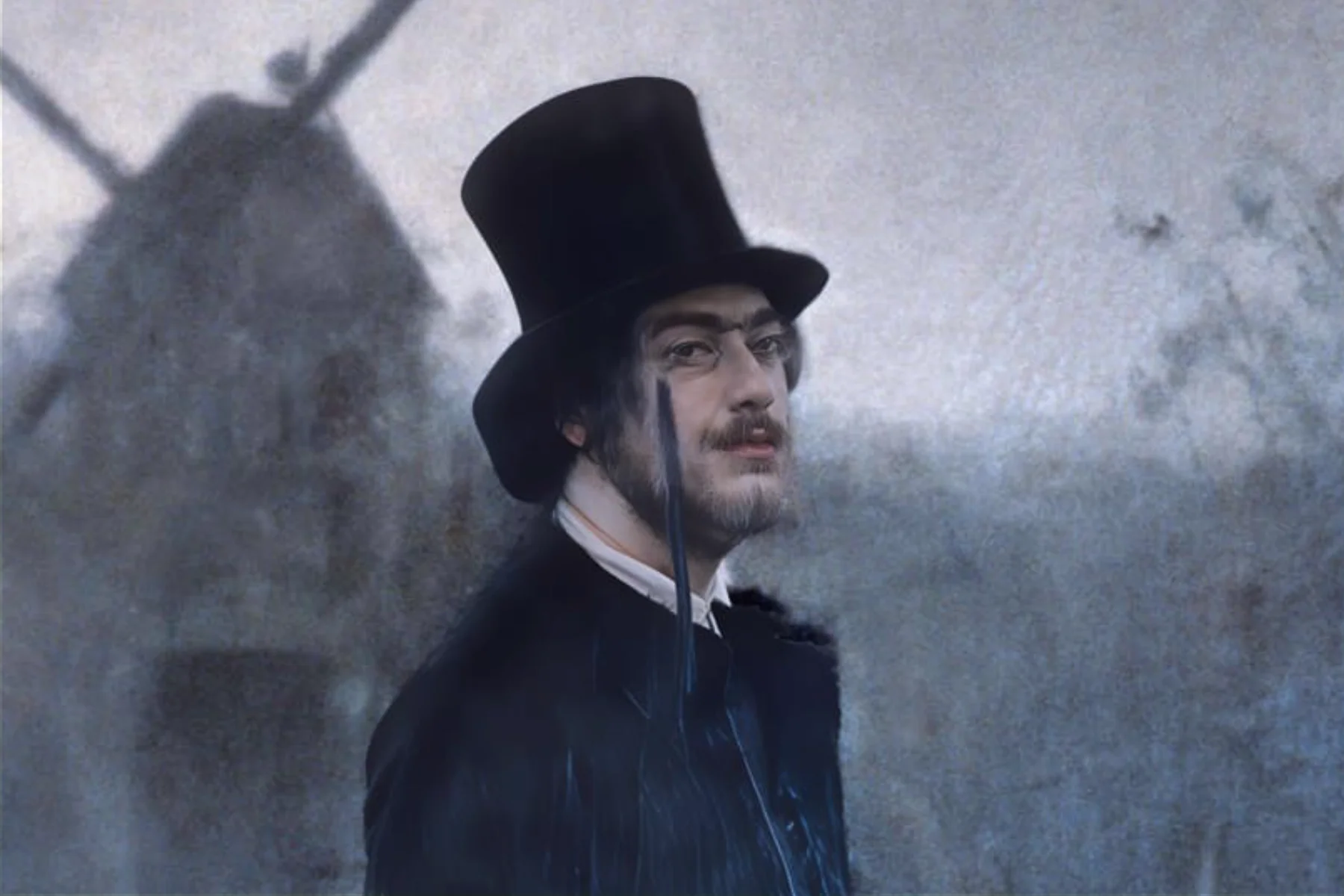
Erik Satie: The Eccentric Composer
To appreciate Gymnopédie No. 1 fully — and to really dive into how to play it — we first need to understand a bit more about the man behind the music. After that, we'll dive deep into the piano technique involved.
Erik Satie, born in 1866, was a contemporary of renowned composers like Claude Debussy and Maurice Ravel. He had a remarkable personality and was often seen as an eccentric figure in the world of classical music. Despite his unorthodox approach, he had a notable impact on French music of the late 19th and early 20th centuries.
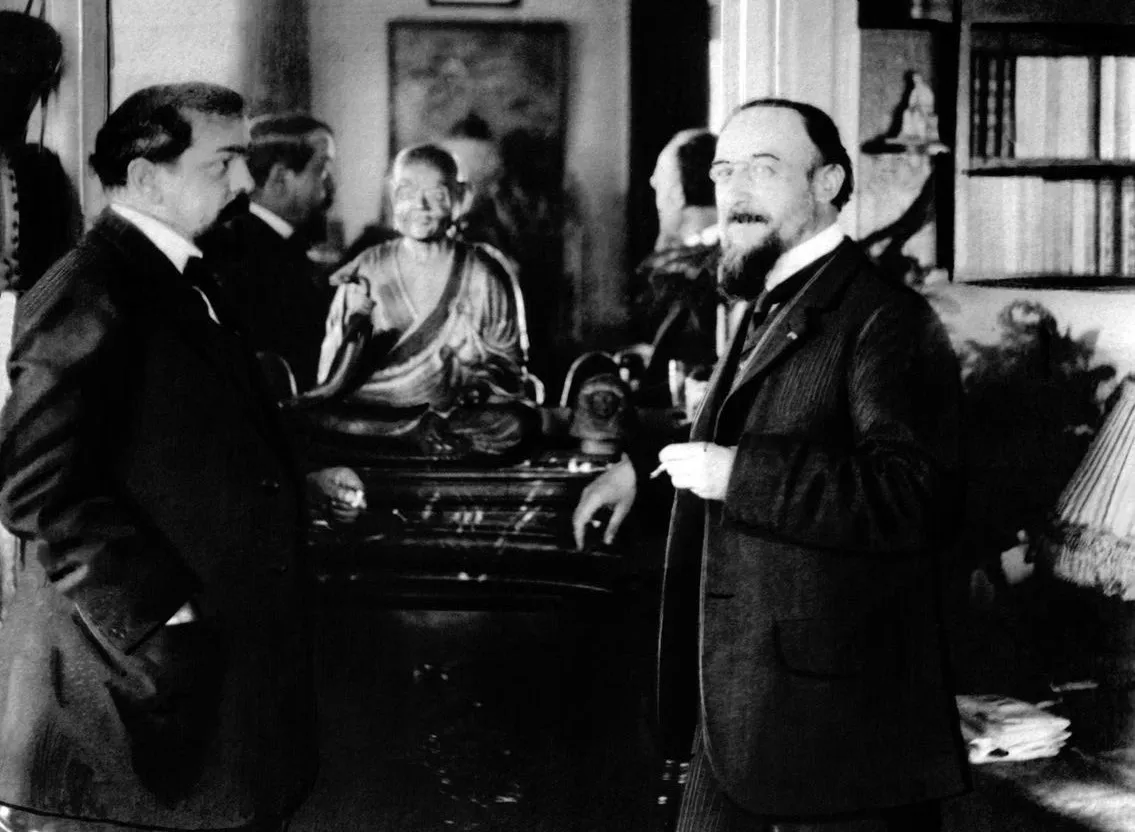
The Spartan Dance Called Gymnopédie
Gymnopaedia was an annual festival celebrated exclusively in ancient Sparta — it included a war dance of naked young men and choral singing. Satie's Gymnopédie No. 1 takes its character from this Spartan dance of naked youth.
It carries a sense of melancholy and longing, and Satie envisioned it as a slow dance — one that is both erotic and graceful. Despite its slow tempo, it should never feel static; it must always maintain a sense of movement.
How to play Gymnopédie No. 1
What do you learn in the video?
If you truly want to bring out the magic of this piece — the delicate piano sound, the una-corda colours, the dance that lives behind every note — this video tutorial walks you through the essentials.
Piano Fingering and Arm Movements
To bring out the best sound, explore fingerings that allow for better control. Pay attention to fingerings that help divide chords between your hands. In the video, we'll also explore the arm movements that enhance this dancing movement in the music — and how arm movements help connect chords and shape phrasing.
Use of the Sustain Pedal and Una-Corda
Use the pedal judiciously, and use your ears to create a special blending of sounds. The pedal is essential in creating the ethereal, imaginative atmosphere of the piece. We'll also experiment with the una-corda pedal.
Character of the Music
Visualize the dance as you play. The slow tempo requires a graceful, almost weightless approach. Remember the mix of melancholy and sensuality in the music — never lose the rhythm in your creation of beautiful sounds.
Conclusion — How to Play Erik Satie Gymnopédie No. 1
Erik Satie's Gymnopédie No. 1 is a beautiful composition that challenges pianists — both beginners and advanced players — to explore the subtleties of piano sound. Understanding the character of the music, employing strategic fingerings and arm movements, and using the pedals effectively are the keys to mastering this piece.
Remember that, despite its apparent simplicity, Gymnopédie No. 1 is a masterpiece that continues to captivate listeners and performers alike.
I'm sure this video post will give you insights into the piano technique needed to express the magical sounds of Gymnopédie No. 1 — and inspire you to explore Erik Satie's music further.
Enjoy your piano journey, and let the haunting melodies of Satie's creation come to life at your fingertips.
DOWNLOAD HERE THE SCORE with my fingerings, arm movements, and more tips on how to play Satie's Gymnopédie.
Gymnopédie No. 1 from Erik Satie. The Gymnopédies are really pieces for working on the sound. Technically they are not difficult — but we're going to explore some nice fingerings to make it sound better. The whole magic of the piece lies in the sound, not so much in any pianistic difficulties. So we're going to explore the piano sound.
We're going to explore how to use the piano pedal, which is quite straightforward in the piece. And we will also discuss the character of the music. It is a Spartan dance of naked youth, and it's a dance of a sad character. A slow dance. That's in the music — that's what Satie was imagining. It has something erotic about it, and at the same time it should dance. It's slow, but it's not static; it must move.
We're going to look into that. The movement of the piece and the sound — these are the most important elements to work at. For the rest the notes are quite easy to learn for a beginner, so we're not going to talk about that in this video.
First, let's look a little bit into who Satie was. Satie was born in 1866, so a few years later than Debussy. He was a contemporary of Debussy — they knew each other very well. Ravel also knew Satie, and Satie knew Ravel. He was a little bit an awkward, strange man — a funny personality. And as a musician he came across more as a dilettante than as a professional.
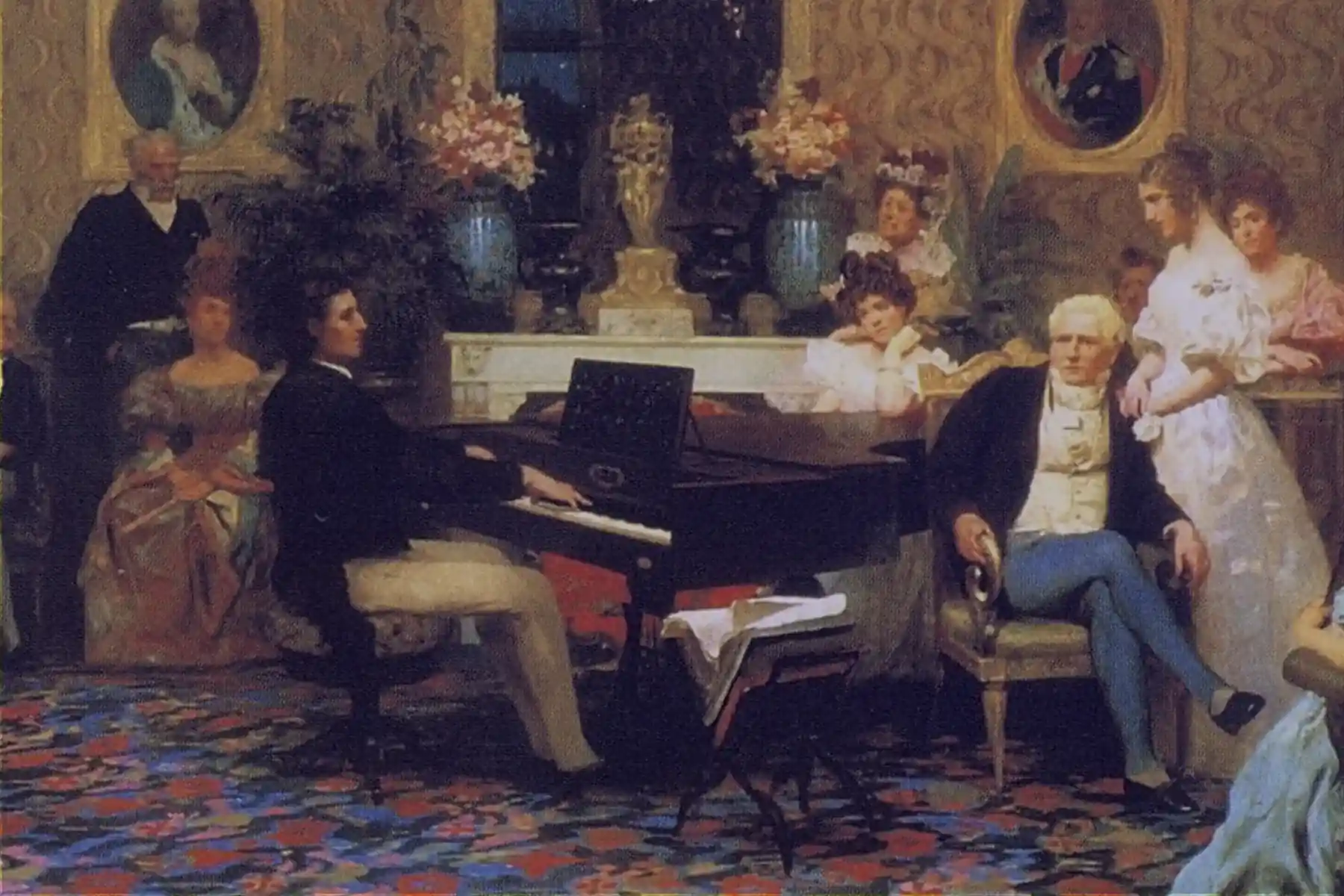
Erik Satie studied at the Paris Conservatoire for a while as a student of Émile Decombes, who was a pupil of Chopin. But he got expelled, and Émile Decombes called him the laziest student at the Conservatoire. Later he got re-admitted at the Paris Conservatoire and became a student of Georges Mathias — another Chopin pupil. Mathias described Erik Satie's playing as insignificant and laborious.
Satie called himself worthless. That's how he saw himself. So he didn't finish his studies at all, and he went to the army — and he got expelled there as well. In his twenties he started to write small piano pieces. *Les Gymnopédies* were part of those pieces, and Debussy orchestrated *Les Gymnopédies* — that was very good for Erik Satie's career.
Suddenly he was recognized as a composer. Later Maurice Ravel played some of his early works, which gave him another reputation. The rest of his reputation he probably got from the funny names he gave his compositions. He was a friend of Picasso — Pablo Picasso also designed the costumes for his opera. Stravinsky liked Satie very much.
Debussy liked his early works — he found them promising. But later on he had some criticism of Satie's works. Erik Satie really didn't appreciate that, and he broke his friendship with Claude Debussy one year before Debussy died. A year later, when Debussy died, he even didn't attend the funeral — he was still offended by Debussy's criticism.
Completely unsure of himself, every criticism he took very hard — he felt offended by it.
I'm just reading this — *My Many Years* by Arthur Rubinstein, an autobiography. He writes about the first time he met Satie. It's funny, so I'd like to read it for you a little bit. *"It was a tea party with Sergei Diaghilev and Léonide Massine — and Erik Satie, whom we met for the first time. He was a small man with little hair left, bearded, and with eyeglasses which sat unsafely on his nose. When he spoke he would hold his hand in front of his mouth — apparently to cover some bad teeth. I didn't know any of his music.*
*"But he was generally credited as a master who had shown the way to 'Les Six'. His titre de gloire was the fact that Debussy took the trouble to orchestrate his Gymnopédies. His small pieces for the piano were better known for the witty titles and remarks in the scores than for the music itself.*
*"He would call a piece 'In the Shape of a Pear', or 'crescendo if you believe me' (si vous m'en croyez), or — where a sudden pianissimo followed a fortissimo — he would ask the pianist to hunch over the keyboard (le dos voûté). On that occasion he struck me as a wit, full of vitality."* It doesn't talk very highly of him — more in a joking way.
Arthur Rubinstein didn't take him very seriously, and many pianists don't take Satie seriously. So you won't find him in the concert programmes of many pianists. But nevertheless, I think the music is very worthwhile — when we want to work a little bit on the sound of the piano. In this respect we are going to also learn this first Gymnopédie.
By the way, I have a link in the description for the score. In the score I write my fingerings — how I divide the chords between the two hands. I have my way of doing that, to enhance the best quality and control of the piano sound. So you can download it and follow me along a bit better. And if you're new to this channel — don't forget to subscribe, because I make weekly new videos with different pieces, but also about other subjects on piano technique, to help people like you learn the piano better, faster, and more efficiently.
Hit the subscribe button and the bell so you'll be notified for everything. Let's get to it…
Until so far. I think this should be the tempo — not slower than this. I wouldn't even start to imagine how you would dance on such a slow tempo. It's a bit too slow, I think, even for a slow dance. *"Lent et douloureux"* — that means slow and with a sadness in it. But still danceable. It's a dance. So… always one hand… and now I divide here.
That's one sentence. I would not play it like many people do — like this. It's easier… it's easier, that's true. It is a bit easier, because you don't have to think much. But it will not give you the best control of the sound. The best control of the sound is to make a little stretch here — with 1-3 and 5. See — open the hands. 2 and again 2, 5… 2… 1… see. And here soft. And then he writes *forte*, but the forte is only for this chord that comes in between.
And it should not be overdone. When you listen to Debussy's orchestration, these are muted trumpets that play these chords. And this F sharp, which is connected over four bars — this will be revived every time when you play that chord on the second beat in each bar. So… soft, and then a little bit into the key, to get this… a little bit pressing sound.
Not without energy. I would really search for the right sounds. This is a piece — if you work on it a little bit and work on the sound most of the time, you will learn something from it. The left hand stays *piano*. The *forte* is not, not like this — not for the left hand. Absolutely not. That stays piano — only for the chords. And pedal change every bar. See, and then… pianissimo…
And imagine this dance — a slow dance. You have to imagine the dance to make it move. And with three: 3 and 5. See — three, and three taken over with five. We do this a lot. It has a better sound: three and then with five. It's a better sound than just directly with the five. And playing five, two. Use a nice arm movement. It's always a round-arm movement.
Think of a dance — but it's also pianistic: round arm movements. A little bit more serious… and a soft ending. Feel the chords — these beautiful chords. There are beautiful colours in every chord. It's very nicely done. That's why Claude Debussy orchestrated it — because it's interesting.
See, I take this with three, five. See — 3-5. And then I take it 3 and take it over with 5. And then I take this with three again. This fingering: 2-5. And here 2 in the left hand. And with the 4 I take it — and don't press the key again with the 4. See, and then…
This goes a little bit more forward, with a crescendo over three bars. I take a fingering — I go over the five with the four. So: 2, 3, 4, with the 1 on the F, 5, 4 over. Let loose — 3, 4, 5. It gives freedom, this kind of fingering. I use it quite a lot. I learned that from my teacher Avi Schönfeld: to pass over — so not always using the thumb passing beneath to reach another key.
Sometimes we go over the five, or — mostly — from five with a four, or five with a two, like… see? You don't use the thumb here. And the same — no thumb, but arm movements. Really search for the round arm movements. Every time round arm movements to get fluent from one to the other position. And synchronize the left and the right. I play this as 2-5, and again with the 4 over. And this must be the right notes.
With the three. Here with the 3 to get this nice round sound. The three you keep here. And you play… while you're holding the three. See — and D major. See, that's the first half, and it continues the same. So this again. To get the nicest sound, here you play this with two fingers on each key. The D you play with 1-2, and the F sharp you play with 3-4. And the same here.
And again — pianissimo. And it continues like that. See it as a dance. See — that's the same; it was a repetition of what we already had. Now… like in the beginning. And the pedal is really per bar. And prepare — every chord needs to be prepared. Especially this chord… and this… see how nice…
And the same — round movements. And every time open, so that you can prepare. When you prepare, open the hand. Make exercises like this. The right pedal is per bar. It's very straightforward: pedal… see… pedal… pedal… Remember that when you do the pedal, you always play — see — you can start with the open pedal, so you can have the pedal down.
Also, use the left pedal (una corda) by the way. It's a nicer sound — it changes the colour of the piano. So use the left pedal also. It's not cheating, as some teachers say. That's just the biggest nonsense on earth — when you say it's cheating to use the left pedal to play soft. You can also use the una-corda pedal when you play strong. It just changes the colour of the piano.
It's not easier to play soft with the left pedal — but you can create a different kind of sound. So, pedal… pedal… first the note, and then pedal — so just right after the first beat you let go the pedal and press it back again. That's the principle of pedaling. Very straightforward. It's not yet Debussy, this.
That was the tutorial on Gymnopédie No. 1 by Erik Satie. If you like this video give me a thumbs up, so that other people know this is good content. They will watch it and benefit from it too. And it will help my channel a little bit. If you're not subscribed yet, hit the subscribe button and the bell so you won't miss out on any of my new videos. Because weekly I post new videos to help people like you learn the piano better, more efficiently, and get more enjoyment with the piano. Here's the video I'll recommend you to watch right now.
And I'll see you next time.