The History of Für Elise
In this article, we'll dive into the history of Für Elise. At the end of this post, you'll find my one-hour video tutorial: How to play Für Elise by Beethoven.
Ludwig van Beethoven (1770–1827) wrote 51 bagatelles, including Für Elise, probably written in 1810. Many bagatelles were published during Beethoven's life and got an opus number, but Für Elise was one of those published after his death — no less than 40 years after, in 1867, by the Beethoven scholar Ludwig Nohl, who listed Für Elise as Bagatelle in A minor WoO 59.
WoO stands for the German words: Werke ohne Opuszahl, meaning work without opus number. In the works of Chopin, for example, we often see "Opus Posthumous," meaning the work is published after the composer's death. This doesn't necessarily mean the same thing.
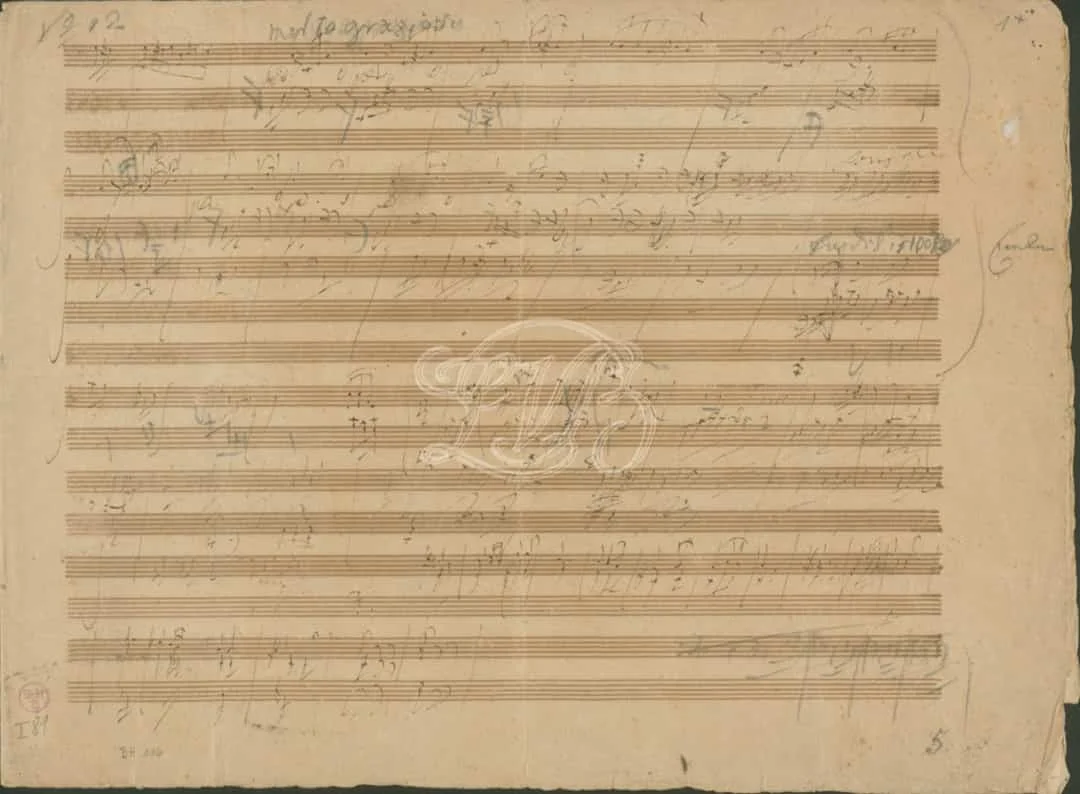
Ludwig Nohl claimed to have seen the original autograph, which has since disappeared, never to be found again. All that is left is a sketch in Beethoven's handwriting, dating from 1822, together with a few other compositions. It was a draft of compositions that Beethoven considered at the time for publication.
In the autograph is written according to Nohl: "Für Elise am 27 April zur Erinnerung von L.v. Bthvn." Meaning: To Elise on April 27th as a memory of L.v. Beethoven. Hence, the name "Für Elise" has been given.
The until-1867 unknown piece was found in 1851 among the personal papers of Therese von Droßdick, born Malfatti, who gave it to Miss Bredl in Munich.
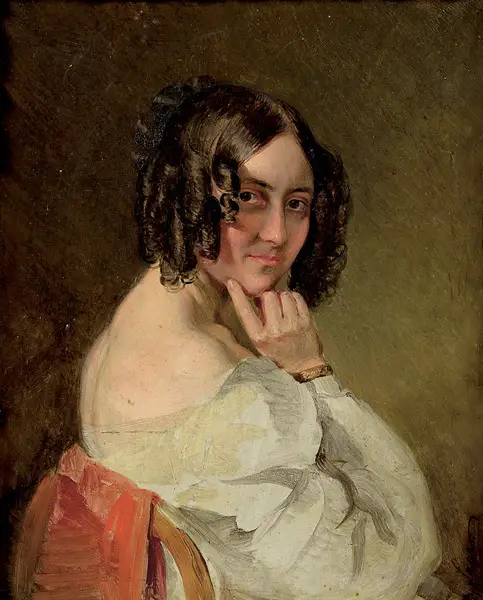
Who Elise was is still unclear. Several theories are in circulation. Beethoven was in love with Therese Malfatti, who also took piano lessons with him at the time of writing. She married someone else later on. So, most likely, Elise was a misreading of Therese or otherwise her pet name.
A misreading wouldn't be surprising because Beethoven's handwriting was very hard to read. Scholars spent many years interpreting his handwriting. Remember also that the autograph was found among Therese's papers many years after Beethoven's death. That fact would be odd if the piece didn't belong to her.
If Elise and Therese weren't the same person, Elise must have been an acquaintance Beethoven met once or twice. At the time, it was fashionable among artists to dedicate little pieces of art as a manner to bestow recognition to a friendship, with no romantic intentions in most cases. In fact, most of Beethoven's compositions are dedicated to benefactors and friends.
What is a bagatelle?
A bagatelle is a little, uncomplicated instrumental piece typically for piano with a light character. Beethoven wrote quite a few of them — 51 that I know of. Most of them were published during his life under the opus numbers 33, 119, and 126.
We pianists revere Beethoven for his legacy of thirty-two piano sonatas, and not without very good reason. Those sonatas embody his robust genius in all manifestations. His sonatas are serious and, except for a few easier ones, challenging works for the piano. They develop from his early classical yet romantic style, moving to a highly romantic, tempestuous middle period.
From the 'Hammerklavier' sonata onwards, the late Beethoven style becomes more and more complex and introspective, even esoteric. At this time, he was composing in virtually complete deafness, only having his inner ear to guide him. No serious pianist should go forward bypassing these masterworks. They bear significant importance in the development of not only piano playing but also of music history in general.
Nevertheless, the bagatelles are not to be neglected — little gems of genius that show the master composer from a lighter side!
How to Play Für Elise Like a PRO
What do you learn in the video?
In this one-hour piano tutorial, you will learn how to play Für Elise by Beethoven the right way — the technique behind the iconic opening, the arm and wrist movements, and the musical interpretation that makes it come alive.
Piano Technique
We will look at the role of the arm weight and arm movement in piano technique — how it is used in Für Elise and why it is important.
Fingering and Voicing
The fingering in Für Elise has a huge impact on the sound — on the voicing of chords and on the musical expression.
The Musical Interpretation
Für Elise has a beautiful and romantic melody. We will look at the musical interpretation — how to make it sound beautiful and romantic.
Transcript available in the video.