A Summer Away Can Still Feed Your Playing
A summer away from the piano is a well-earned rest. A few weeks off resets the mind, and there is nothing to feel guilty about.
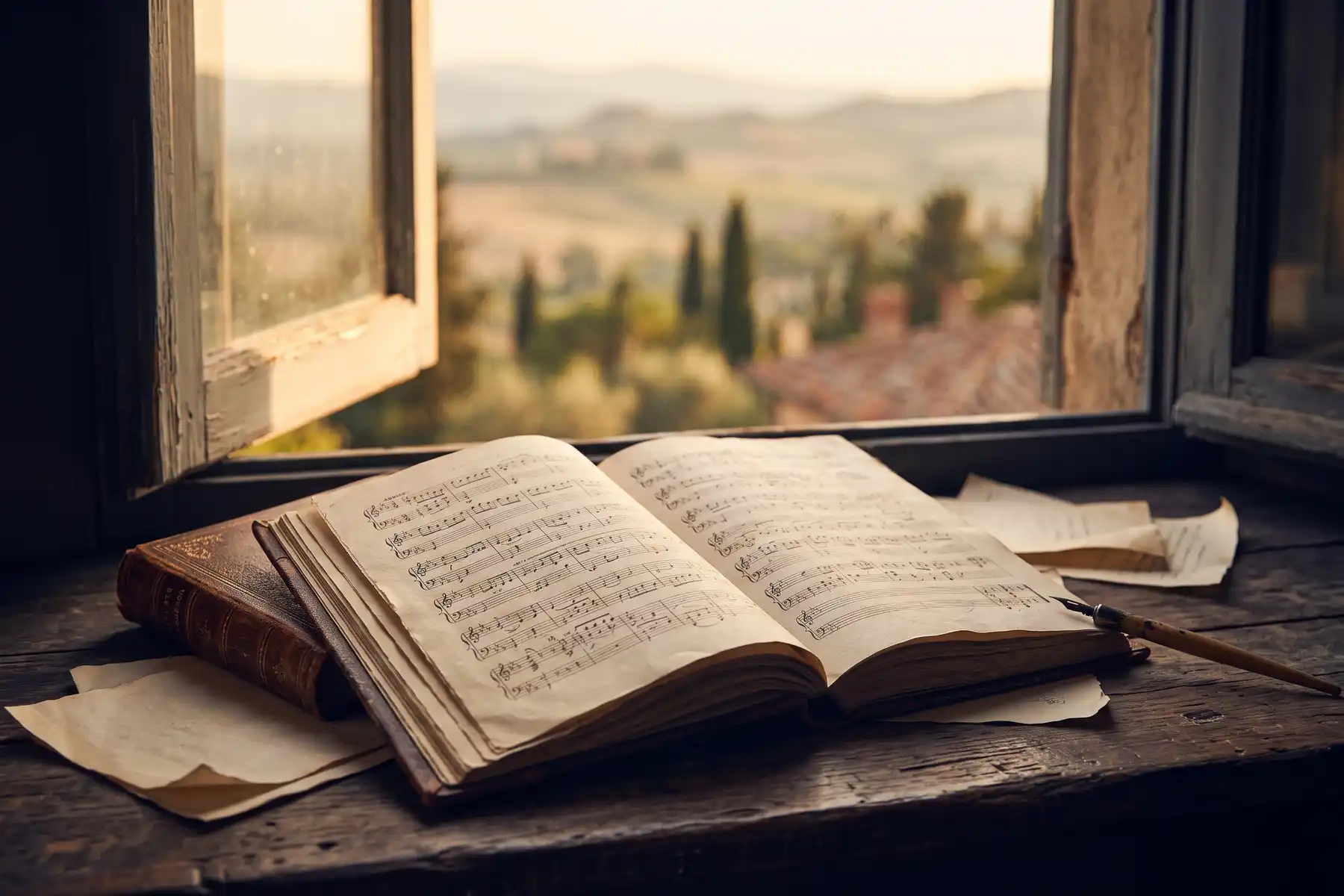
But time away from the keys does not have to be time away from the music. The rest can still feed your playing — if you spend a little of it reading around the pieces you love.
Think about what you play, or what you hope to play next. If you have some Liszt on the stand, or somewhere in your imagination, you can go and meet the world he lived in without touching a key.
Read Around the Piece: Liszt and Dante
Read a short life of the composer. Then read what he himself was reading.
Liszt read Dante's Inferno, and you meet it head-on in the Dante Sonata — its full title is "Après une lecture du Dante," a reading of Dante set to music. You can feel that same shadow falling across other works of his too, less directly, more as atmosphere than as a program. But the Sonata is the clear, documented link, and the Inferno is one of those books anyone who loves Liszt should read at least once.
Here is the thing worth being clear about: you are not practising when you do this. You are feeding the imagination behind the sound. That imagination is a real part of technique — it is the difference between playing the notes and hearing where the colour and the lineage of the sound come from. Then, when you sit down again in September, the music has a fuller world behind it. Nothing on the page has changed. What you bring to it has.
A Small Method for Reading Around a Piece
You do not need a syllabus for this. A loose method is enough:
- Find a piece you play, or a composer you love.
- Find a book of its time and place.
- Read a short biography first, to sense what moved the composer.
- Then reach for a better book — try to catch that world, not just the facts of it.
- Listen too. This is also a good stretch of summer to work on listening around the music — recordings of the piece itself, and the music of its time.
- Then feel that sound world, and let what you read blend with the sound already in your mind.
None of this is heavy work. A biography by the pool and a couple of recordings on a long drive will do more than you would expect.
In Short
Time away from the piano does not have to be time away from the music. Read around the pieces you play — the composer, the era, the books he himself read. You come back with a fuller picture of the sound, and often with the itch to play it.
Where This Continues
In the Piano Fantasy community, this is exactly the kind of thing we talk about. You can ask what to read for the piece you are on, and I will often suggest a book or two — and the students there tend to inspire each other more than I do.
And when you come back to the piano after a summer away, the return has an order of its own — the fingers first, then the music.
You can keep exploring like this on your own, which is genuinely worth doing. Or you can follow a clear system that builds this sense of the music step by step, alongside the playing.