Piano Fantasy
HomeAboutBlog
Store
Start LearningStudent Login
HomeAboutBlog
Store
Start Learning
Student Login

Follow us on social

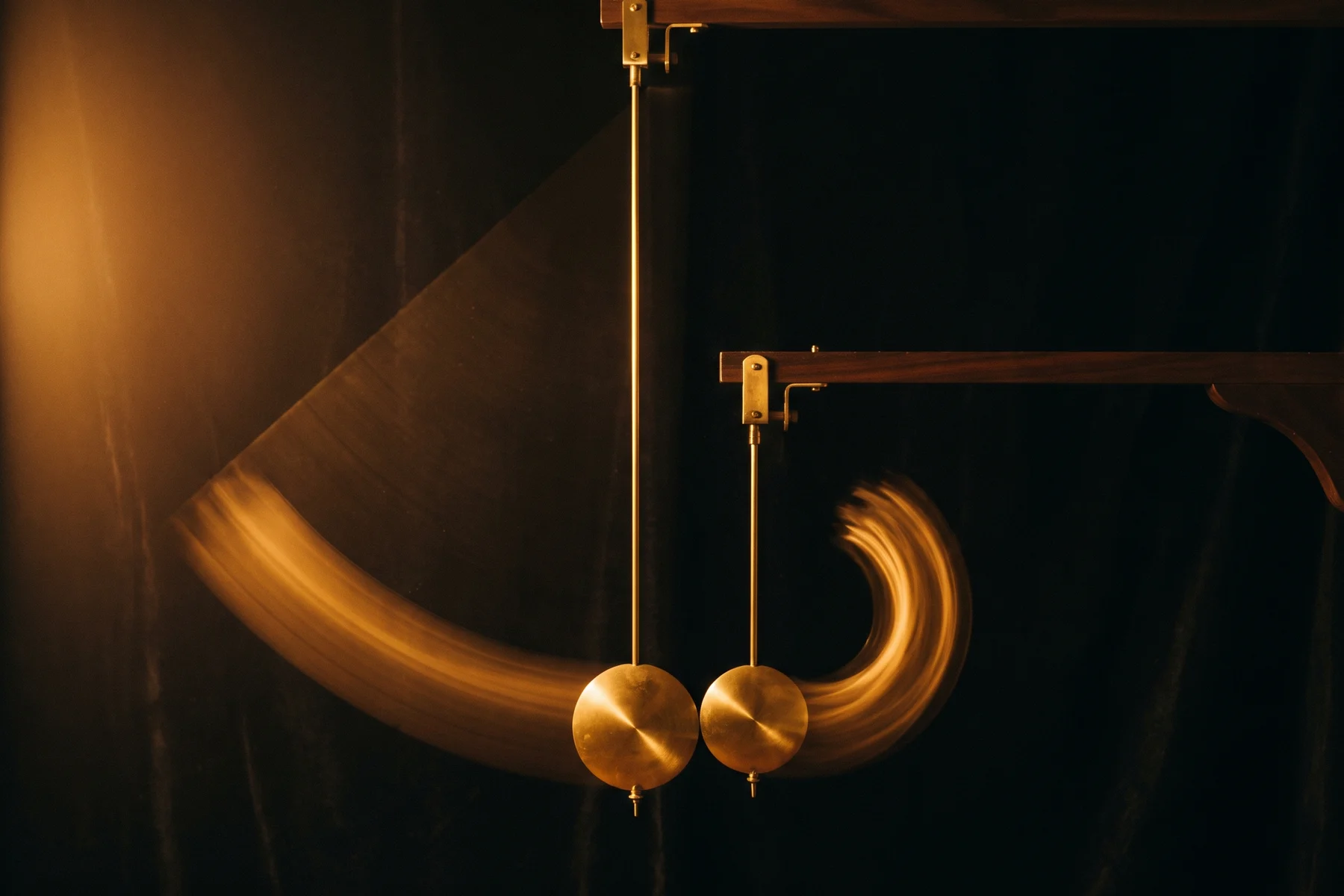
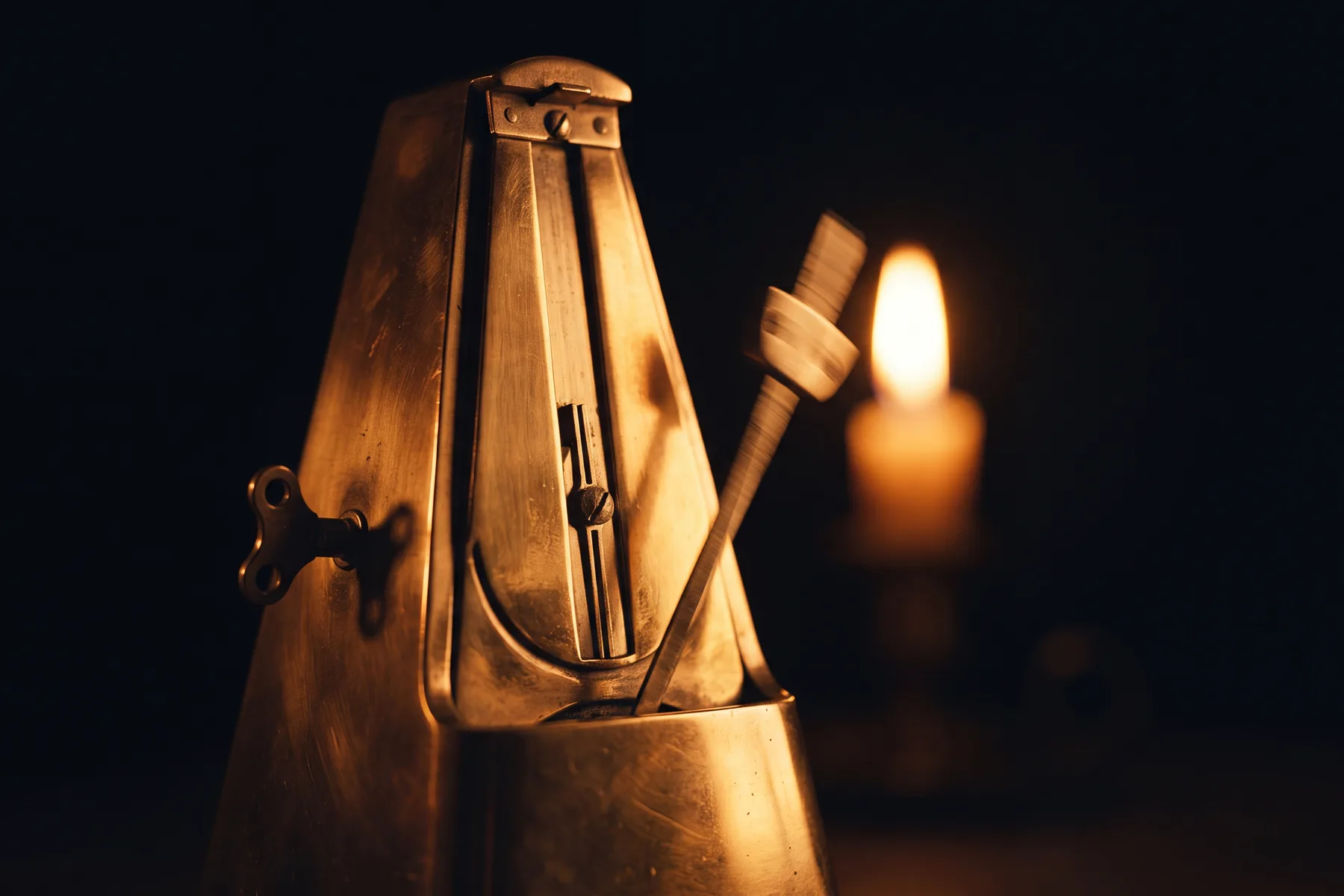
An antique brass metronome mid-swing, its pendulum blurred by motion, glowing in candlelight against a dark room — a steady pulse that still looks hurried.

Piano-fantasy-minute

The Beat Is Fine, It Still Rushes

Written by Lars Nelissen·August 3, 2026

Steady against the metronome, still hurried to the ear.

  1. Home
  2. Blog
  3. Piano-fantasy-minute
  4. The Beat Is Fine, It Still Rushes

Why Your Scales Turn Uneven at Speed

←Previous Post

Steady, and Still Rushed

A passage can be perfectly steady and still sound rushed.

The metronome agrees. Every note lands where it belongs.

So the playing gets called too fast — and the fix becomes "slow down." But slow practice was never the mistake here.

We call it playing too early. Not too early for the beat, though. The beat is fine.

Nothing was given time to breathe.

Why "Slow Down" Doesn't Fix It

This is why slowing the tempo so often disappoints.

The metronome ticks slower. The notes are still exactly where they belong. And the passage can still sound hurried — because tempo was never the actual problem.

Nothing about how the hand approaches the notes has changed. Only the clock has.

What "Rushing" Actually Means

No time was taken to articulate a note.

No time was taken to prepare one — or a whole group, before it starts.

So the hand arrives early. Not early against the pulse. Early because no breath was taken before it.

That's usually what the ear hears as rushing.

Think of a short scale run, or a group of four notes under one phrase. Play them the instant the previous group ends, with no gathering beforehand, and they blur together — even at a tempo that's technically correct. Give that same group one held instant before it starts, and it separates into something the ear can follow.

Nothing about the metronome setting changed between those two versions. What changed is whether a breath happened before the group, not during it.

A Tiny Taking and Giving of Time

Underneath every steady, unhurried phrase is a tiny taking and giving of time — so small we don't even call it rubato. A held instant before a note. A small give-back right after.

Beneath that is the awareness of time: knowing where the phrase is going, and feeling it — instead of seeing where you end up.

Most students only find out where a phrase was going once they've already arrived there. Awareness of time means feeling the destination while you're still on the way to it — before the last note, not at it.

It can be learned. It usually takes discipline.

Try This

Take a passage that sounds hurried and work it slowly, on purpose. Not to fix the tempo — to fix the breath around it.

  • Decide where the phrase is going before you play it.
  • Prepare the whole group, not only the first note — the same prepared-hand-position thinking that also builds speed.
  • Give one note the time to be articulated.
  • Take a small breath before the group begins.
  • Keep the metronome on. Let it stay right.
  • Feel the time you take, then give it back.

In Short

Rushing is usually not about speed. It's a passage that was never given time to breathe.

Prepare, articulate, and know where the phrase is going before you play it.

Where This Shows Up in Real Playing

This changes how a whole piece is heard.

It's a small habit, not a one-time correction — the same tiny taking and giving of time, applied consistently, group after group, phrase after phrase.

In the Piano Fantasy Academy, this sense of time is built gradually — from simple exercises into real music — so it becomes part of your playing instead of something you occasionally land on by accident.

You can keep experimenting on your own, or follow a clear system that builds this step by step.
→ Start Transforming Your Piano Practice Today.


Piano Fantasy Minute #67 – You’re reading the 🎹 Piano Fantasy Minute — part of a growing series of short, practical piano insights, published twice per week.

Continue reading

  • A lone skate groove carves one continuous golden arc across dark ice — momentum carrying the glide evenly from edge to edge.
    Piano-fantasy-minuteWhy Your Scales Turn Uneven at SpeedJuly 30, 2026
  • A brass lantern set at the foot of a dark stone step, its warm light spilling across the ground just before the rise — the way prepared before the climb.
    Piano-fantasy-minuteWhen a Passage Breaks, Look Before It: Preparing the Hand for the Hard PartJuly 27, 2026
  • Two hands playing on a grand piano keyboard in warm lamplight, the keys running diagonally through the lower frame and the room falling away into shadow behind
    Piano-fantasy-minuteHow to Strengthen Fingers for Piano: Freedom Comes FirstJuly 23, 2026

From the piano

Two short emails a week on technique, musicality, and practice. Leave anytime.

Step 2 of 2

What's your first name?

We use your first name to greet you personally — nothing else.

Thanks — you're in.

Check your inbox for a welcome note from Lars.

Become a Pro Member

Monthly live lessons, daily community, full course library — Join Today. Cancel Anytime.

See what's included

Continue Reading

Piano Fantasy MinuteA lone skate groove carves one continuous golden arc across dark ice — momentum carrying the glide evenly from edge to edge.
July 30, 2026·5 min read

Why Your Scales Turn Uneven at Speed

A scale sounds even at a slow tempo, then a small bump appears the moment you speed it up — evenly spaced, every few notes. That is not a fingering problem. It is the thumb being forced to do something it no longer has time for.

Read
Piano Fantasy MinuteA brass lantern set at the foot of a dark stone step, its warm light spilling across the ground just before the rise — the way prepared before the climb.
July 27, 2026·5 min read

When a Passage Breaks, Look Before It: Preparing the Hand for the Hard Part

A passage that fails at the same spot is usually not a problem with that spot. The hand arrived unprepared a note or two earlier — and that is where the fix lives.

Read
Piano Fantasy MinuteTwo hands playing on a grand piano keyboard in warm lamplight, the keys running diagonally through the lower frame and the room falling away into shadow behind
July 23, 2026·5 min read

How to Strengthen Fingers for Piano: Freedom Comes First

Fingers are not developed by strengthening alone. They are developed by being freed first — an open hand, a finger that can lift clearly, a strike that is already prepared before it arrives. Freedom is what makes the speed available in the first place.

Read
Piano Fantasy MinuteTwo braided ribbons of light — warm amber and cool blue-white — crossing and fusing into a single continuous strand against near-black, two opposite motions becoming one whole
July 20, 2026·5 min read

Hand Independence in Piano Technique: Why Preparation Beats Suppression

Hand independence is not one hand learning to ignore the other. It is each hand prepared separately for its own job — its own finger shape, its own concentration, its own arm weight — and each hand aware of the other. Coordination is what organisation produces, not what force produces.

Read
Piano Fantasy MinuteA flat golden grassland stretching to a low horizon, with a wave of wind sweeping across the grass.
July 16, 2026·5 min read

Horizontal Arm Movement in Piano Technique: How the Hand Travels Across the Keyboard

Wide passages feel impossible when the hand is reaching for notes it was never meant to reach from one position. Horizontal arm movement carries the hand across the distance instead — forearm-led, wrist free — so what felt like a stretch becomes a travel, and the passage becomes reachable.

Read
Piano Fantasy MinutePiano Fantasy Minute — branded cover
July 13, 2026·5 min read

Legato With Small Hands: When the Arm Carries What the Fingers Cannot Reach

A small hand cannot span a tenth and hold it connected. But legato is not a property of finger-span — it is a property of intention carried through motion. Where the fingers cannot reach, the arm carries the line, and the ear hears a connection the hand can never physically make.

Read
Piano Fantasy MinutePiano Fantasy Minute — branded cover
July 9, 2026·5 min read

Why Performance Nerves Are Not the Problem

Performance anxiety gets treated as something to suppress. Calming down does help — but nerves are also your body reacting to the unfamiliar, and a big part of the fix is to make the conditions familiar and practice at two tempos, so a faster heartbeat on stage can't push you into rushing.

Read
Piano Fantasy MinutePiano Fantasy Minute — branded cover
July 6, 2026·5 min read

Half Pedaling: The Pedal Position Between Down and Up

A full pedal change clears everything, and often that is exactly right. But some passages need less clearing than a full change gives — and that is where half pedaling lives, in the position between down and up.

Read

The instruction your practice has been missing.

Piano Fantasy Pro is where the instruction gap closes — deliberately, with a teacher who can see your specific situation and a small community working at the same depth.

Courses, live lessons, written feedback on what you're actually practicing. The membership is small on purpose — around twenty serious pianists. The price is honest. The work compounds.

Become a Pro Member
♫NEWSLETTER

Piano Technique in Your Inbox

Twice a week, the Piano Fantasy Minute lands in your inbox — a short, serious read on technique and musical expression for pianists who care how they play, not just what they play.

Step 2 of 2

What's your first name?

We use it to greet you personally — nothing else.

Thanks — you're in.

Check your inbox for a welcome note.

Continue reading

  • A lone skate groove carves one continuous golden arc across dark ice — momentum carrying the glide evenly from edge to edge.
    Piano-fantasy-minuteWhy Your Scales Turn Uneven at SpeedJuly 30, 2026
  • A brass lantern set at the foot of a dark stone step, its warm light spilling across the ground just before the rise — the way prepared before the climb.
    Piano-fantasy-minuteWhen a Passage Breaks, Look Before It: Preparing the Hand for the Hard PartJuly 27, 2026
  • Two hands playing on a grand piano keyboard in warm lamplight, the keys running diagonally through the lower frame and the room falling away into shadow behind
    Piano-fantasy-minuteHow to Strengthen Fingers for Piano: Freedom Comes FirstJuly 23, 2026

From the piano

Two short emails a week on technique, musicality, and practice. Leave anytime.

Step 2 of 2

What's your first name?

We use your first name to greet you personally — nothing else.

Thanks — you're in.

Check your inbox for a welcome note from Lars.

Become a Pro Member

Monthly live lessons, daily community, full course library — Join Today. Cancel Anytime.

See what's included
Piano Fantasy

Make every piece you play sound like music.

Practice that finally adds up

Better instruction, not more hours.

Join Pro Membership

Explore

HomeAboutBlogStoreFree PDFsTestimonials

Help & Account

Help & SupportContactStudent Login

Legal

TermsPrivacyCookies

© 2026 Piano Fantasy. All rights reserved.