What Rubato Actually Is
Rubato often gets used as a license. Slow down here, push on there, let the music bend to feeling. And sometimes what sounds like freedom is really just a passage that has not been mastered yet — the timing wobbles because the hand is not sure of it, not because the player chose to bend it. What I do with a passage like that, I wrote out in how to keep tempo on piano: make it secure in every place, so the tempo is your choice again.
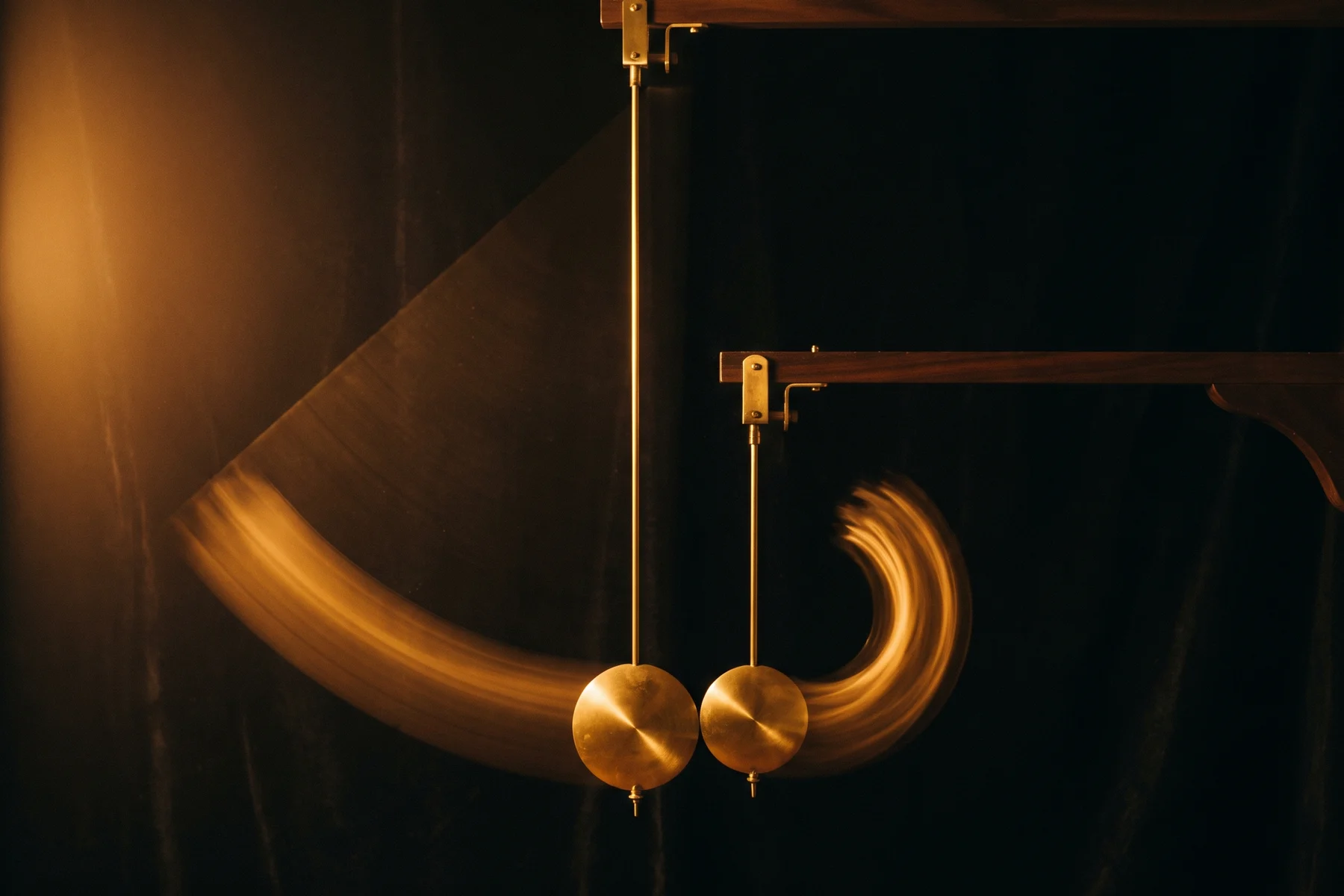
So what is rubato in piano, properly? It is time borrowed in one place and returned in another, over a pulse that never disappears. You take a little time on one note or gesture, and you give it back somewhere else in the phrase. The flexibility is on the surface. Underneath, the beat keeps walking.
That last part is the part most explanations skip. Rubato is not the absence of rhythm. It rests on rhythm. The freedom only sounds like freedom because something steady is holding it up.
The Pulse That Never Disappears
Here is the claim that surprises people: rubato asks for a stronger sense of the pulse, not a weaker one.
It sounds backwards. If the playing is meant to be free, why would you need the beat more firmly, not less? Because you cannot bend time you do not feel. If the pulse is vague to begin with, then stretching it does not produce expression — it produces drift. You are not borrowing against something solid. There is nothing underneath to borrow from.
This is why building a steady underlying pulse you can actually feel comes first, and the rubato comes after. The metronome work is not the opposite of expressive playing. It is what makes expressive playing possible later, once the pulse is internal and you no longer need the click to find it.
When the pulse is reliable, you can lean on it. You can take time, knowing exactly where you are taking it from and where it has to come back. You take time knowing where it has to come back — and what you are leaning toward across that stretch is the point the phrase is leaning toward.
What the Listener Actually Hears
A listener does not hear "rubato." They hear a line that feels alive, or a line that feels indulgent. The difference is usually the pulse underneath.
When the pulse is steady, the flexibility reads as expressive. The surface bends, the beat holds, and the bending sounds like a choice. The phrase has ground to stand on.
When the pulse is missing, the exact same gestures sound self-indulgent. The same rubato, played without a beat underneath it, loses its shape. The listener does not think "how free" — they think "where are we?" Nothing has changed in the gestures themselves. What changed is whether anything is holding them together.
Why Borrowed Time Has to Be Returned
Borrowing is only half of it. The other half is giving the time back.
If you take time and never return it, the phrase keeps slowing, keeps stretching, and eventually it stops breathing. It drifts. The rhythm comes apart, not because you were too expressive, but because you only did the first half of the gesture. This is close to the way a phrase can sound flat when the line never resolves — the same kind of failure of the line, arriving from a different direction.
So the return is not a technicality. It is what turns a stretch into rubato instead of just slowing down. The time has to land somewhere. There is a beat where it comes back, and you should be able to find it.
If you cannot find where the time came back, it was probably not rubato yet — only an unsteady pulse wearing the name.
Where the give actually belongs in a phrase — and whether it is a little more time or a little more tempo — is a separate question from what rubato is. I took that one on in how to play rubato on piano.
Try This: Find Where the Time Comes Back
This is small and repeatable, and it works on almost any expressive phrase.
- Tap the underlying pulse before you play, until it is steady in your body.
- Mark the one spot in the phrase where you borrow time.
- Choose the exact beat where that time is returned.
- Play the phrase and listen for both moments.
- Record one pass, then find the return on playback.
The recording step matters more than it sounds. In the moment, almost any rubato feels intentional. On playback you can hear whether the time actually came back or just leaked away. If you can hear the borrow and the return as two real events, you are playing rubato. If you can only hear the borrow, the pulse needs more work first.
In Short
Time is stolen, time is returned, and the pulse keeps walking through both. That is the whole thing.
When the pulse is felt, the flexibility sounds expressive. When it is missing, the same playing sounds adrift — the gestures are identical, only the ground beneath them is gone.
The same principle shows up with ornaments: the musical meaning has to be understood before the fingers can serve it.
Where This Is Built Step by Step
This is one of those details that changes how a whole piece feels once you start hearing it. The flexible, singing playing you admire in good performers is usually sitting on a pulse far steadier than it appears.
In the Academy, pulse and flexibility are taught together from early on, so rubato grows out of rhythm rather than against it. The steadiness comes first, then the freedom has something to rest on — so expressive timing becomes something you can do reliably, not something that happens to land once in a while.
You can keep experimenting on your own, or follow a clear system that builds this step by step.