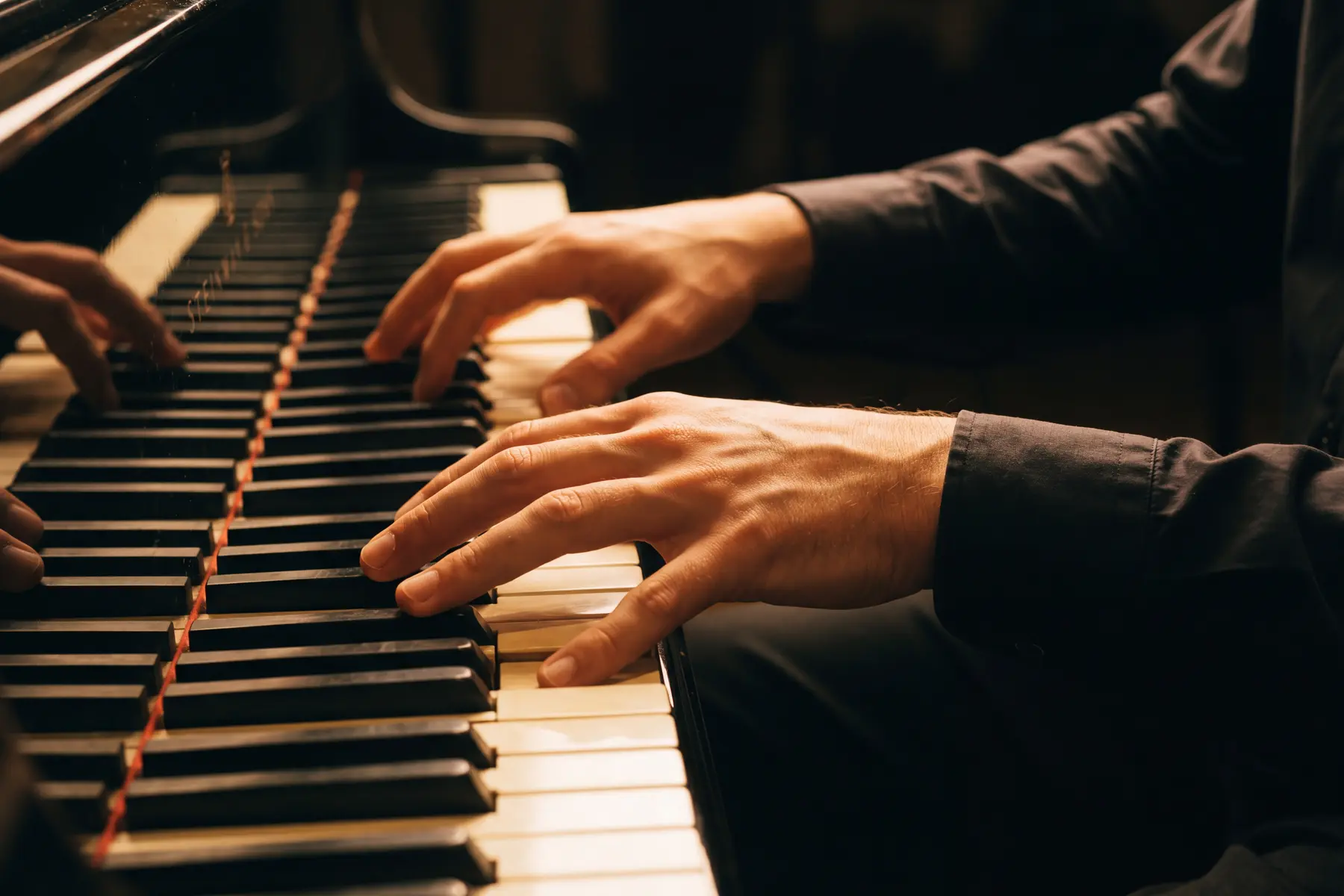
A high wrist can look elegant. It is one of those positions that photographs well and feels disciplined. But at the keyboard, what looks composed often disconnects the hand from the keys — and the sound is the first thing to tell you.
A wrist that stays naturally low — close to the keys without collapsing — does the opposite. It keeps the hand connected to the keyboard so the arm's weight and motion can travel through to the fingertips. This is one of those small details that changes more than its size suggests.
Low Does Not Mean Collapsed
This is the distinction that decides everything else, so it is worth being precise.
A low wrist is not a dropped, slack, sagging wrist. "Low" means close to the keys at a natural, relaxed height — low enough that the hand stays connected, supple enough that motion can pass through it. A collapsed wrist has given up its structure entirely; it absorbs the arm's weight instead of letting it through, the same way a collapsed finger does. The result of collapse is not a connected sound — it is an unstable one.
There is also a difference between letting the wrist settle low and pressing it down. You are not forcing the wrist toward the keys. You are removing the lift that was holding it artificially high and letting it find a natural resting height. Forced down is just a different kind of stiffness. The target is relaxed and low, not pushed and low.
If you take only one thing from this: the low wrist works because it stays connected and supple, not because it is low for its own sake.
What a High Wrist Costs
When the wrist sits too high, the hand is forced to work more independently of the arm, because the arm's weight no longer has a clean path to the key. The hand ends up generating more of the sound by itself.
That shows up in fairly predictable ways:
- a thinner tone, because less arm weight reaches the string
- quicker fatigue, because the hand is doing work the arm should be sharing
- less stability, because the connection that grounds the hand is missing
None of this is dramatic in the moment. It is the kind of inefficiency that feels normal until you hear the alternative — which is exactly why comparing the two directly, in the exercise below, is more convincing than any description.
How the Low Wrist Lets the Arm Work
The wrist does not lead the movement. It allows motion from the arm to pass through it. This is the same forearm-leads, wrist-responds coordination that runs through all the arm work — the low position is simply the height from which the wrist follows best.
This wrist behaviour is one piece of the larger coordinated system of arm, wrist, and fingers.
When the arm moves, the wrist follows freely at a natural height: close enough to the keys to stay connected, never forced down, never fixed. From there it becomes the channel through which arm weight reaches the key as tone. A supple low wrist passes that weight through; a high or stiff one interrupts it before it arrives. Below that hanging wrist, the fingers and the arch they hold are what actually catch and support that weight.
This is also why the low wrist supports both clarity and warmth — not because the wrist produces either one, but because it keeps the path open so the fingers and arm can shape the sound. How the fingers concentrate and how the arm guides the weight is what decides the colour; the wrist's job is to not get in the way of it.
That same open path is part of bringing a melody out above its own accompaniment, where graded arm weight has to reach one finger more than the others — which it cannot do through a disconnected wrist.
Try This
- Take a short scale or simple passage.
- First, play it with a deliberately high wrist, and listen carefully to the tone.
- Then let the wrist settle to a relaxed, natural height — loose and close to the keys, not pressed down.
- Notice how the tone deepens and the hand feels more supported.
Usually the sound tells you immediately which coordination works better. You do not have to decide it intellectually; you have to hear it.
When the Wrist Stiffens or Blocks
Low and supple is the goal; the failure mode at the other extreme is a wrist that stiffens or blocks. When that happens, the arm's movement is interrupted at the wrist, the weight does not reach the fingertips, and over time that kind of working-against-yourself tends to produce fatigue and unnecessary strain. The fingers still have to do their part, too — a supple wrist with collapsed fingers cannot transmit arm support into the keys. Supple wrist, concentrated fingers: the two together are what let the arm's work actually arrive as sound.
Where This Is Built Step by Step
This coordination is addressed from the very beginning of the Super Fingers approach, before more complex movements are introduced — because a connected wrist is something almost everything else depends on.
Inside the Piano Fantasy Academy you can build this step by step, from simple passages to real music, and see how others refine wrist and hand coordination along the way.
You can keep experimenting with this on your own, or follow a clear path that builds it from the ground up.