Piano Fantasy
HomeAboutBlog
Store
Start LearningStudent Login
HomeAboutBlog
Store
Start Learning
Student Login

Follow us on social

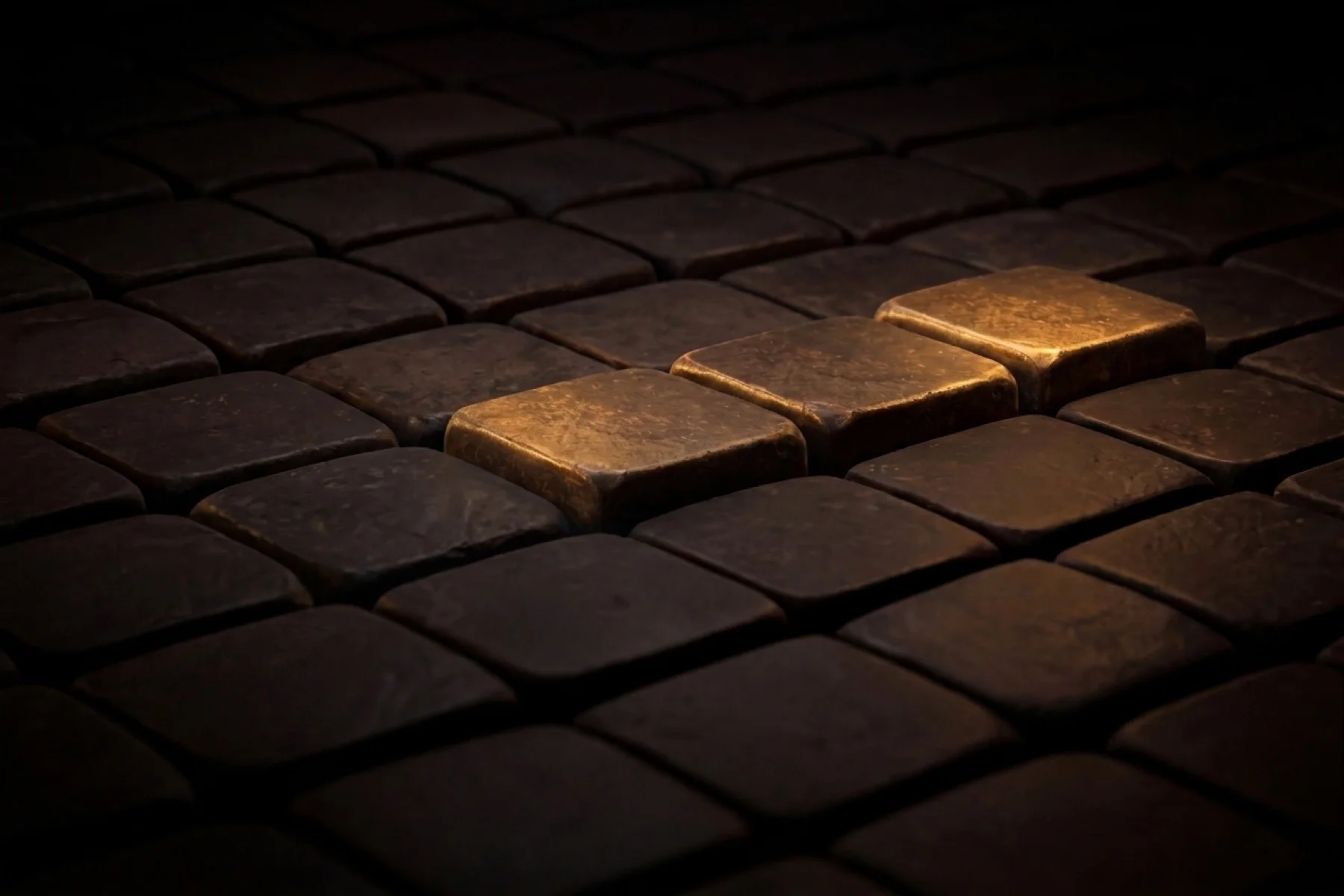
Three warm gold-lit stone tiles rising together in a row from a dark, evenly settled grid of stone tiles, evoking three keys grouped at one shared depth.

Piano-fantasy-minute

Why Chopin Taught Scales in B Major

Written by Lars Nelissen·September 10, 2026

B major is easier to play than C major. It is harder to read, and that is a different question — for the hand, the thumb is already where it needs to be, and there is room to pass over it.

  1. Home
  2. Blog
  3. Piano-fantasy-minute
  4. Why Chopin Taught Scales in B Major

Finger Independence in One Hand: Two Dynamics at the Same Time

←Previous Post

The Scale Everyone Starts With

C major is the easiest key to read. No sharps, no flats, nothing extra to hold in your head while you are already holding everything else. That is why beginners start there, and that is right.

To play is a different question, and it has a different answer. B major is easier to play than C major. It is harder to read, and the reading is what decides where a beginner starts.

Where you feel it is in the thumb. In B major, with the third finger on G♯, the thumb is already sitting on E — in front, on white, while the long fingers stand back and higher on the black keys. It never has far to go. The hand travels on and passes over a thumb that is already standing where it needs to be. In C major everything lies on one plane. There is less room to pass over, so the thumb ends up being pulled across to F. That one is more stretched.

And of the two kinds of crossing, the one where the thumb still has to get across is the harder one. When a longer finger goes over a thumb that is already standing on its key, it is far easier. So the less the thumb has to get across on its own, the better — and in B major it hardly has to at all.

Most people believe the opposite of all this, and I understand why. The black keys are narrower, and people are afraid of them. Play them with slightly flatter fingers — half-round, not fully curved, so you have good contact — and the problem mostly disappears. It is psychology, and a little bit of practice. Not really more difficult.

Thumb on E, and the Hand Falls Into Shape

Here is the position. Right hand: thumb on E, second finger on F♯, third on G♯, fourth on A♯, fifth finger on B. The left hand mirrors it — fifth finger on E, going up to the thumb on B. The three black keys sit together in the middle of the hand, with a white key on either side of the group.

Now look at your own hand. Fingers 2, 3 and 4 are longer than the thumb and the fifth finger. And the black keys sit further into the keyboard, and higher. So the long fingers reach the keys that are already at their level, and the short thumb and fifth stay in front, on white. Nothing stretched, nothing pulled, and no finger asked to do the work of a longer one.

You do not have to take my word for it. Put the hand there and it falls into that shape by itself.

That the black key sits further in and higher also decides whether a single black key gets played cleanly in the middle of an ordinary passage. That is a different problem with a different fix, and it stands on the same piece of geometry — I wrote it out in why black keys still get missed.

Why Not E Major

E major is one sharp short of it, and that is enough to lose the whole thing. F♯, G♯ — and then A natural. The fourth finger comes down on a white key, in front, while its neighbours are still standing back on black. The hand tilts to manage it, and the shape breaks.

Worth noticing, because it is the proof that the shape was real. If B major only worked because five sharps sound impressive, E major would work nearly as well. It does not.

What Chopin Actually Taught, and to Whom

This comes from Chopin, and it is well documented. Karol Mikuli, who studied with him and later edited his works, described the order of scale study in the preface to his 1879 edition — B major first, C major kept for much later. The hand position itself turns up in the piano method Chopin started and never finished. Jean-Jacques Eigeldinger gathered the pupils' accounts together in Chopin: Pianist and Teacher as Seen by his Pupils, which is where most people meet the story now.

The scope matters as much as the story. This was scale work, and it was with intermediate and advanced students — the players who came to him already able to read and already able to play.

We still start beginners in C, and the reason for that is the reading. A beginner has to practise the C major scale too — that one is not free either. If you put a beginner on B major instead, I think they would learn it faster, and it would cost you only more explaining about the black keys. Which is why what Chopin said about the B major position makes sense to me.

The Keys That Ask the Most of the Hand

G major, one sharp. F major, one flat. D major, two sharps. B♭ major, two flats. To read, these are the friendly ones, and every list of beginner scales says so with good reason.

For the hand they are the awkward ones. One or two black keys means the black key is isolated somewhere in the middle of the finger sequence, so the hand makes a local exception for it and then comes back out again. Up and back, up and back, adjusting the whole way through, never settling at one depth. That is mixed terrain, and it is why an even scale in G is harder to produce than most people expect from a key with one sharp in it.

So as a rough line, and not without exceptions: the more black keys a scale has, the more comfortable it is to play, and the fewer it has, the more difficult it usually becomes. D♭ major is a comfortable one — not as comfortable as B major, but comfortable. And this next one is feel rather than law, I cannot prove it to you: G major sits a little easier under my hand than D major, and A major again a little easier than D.

C major is where that line stops, and it stops for a reason. C major and B major are each uniform, in their own way — no black keys at all, or the long fingers all on black. Uniform terrain lets the hand stay where it is. That is what puts C major ahead of G, D, F and B♭ for the hand, and B major ahead of C.

The minor scales bring their own trouble, and the harmonic ones are the awkward ones: the augmented second inside the scale makes the hand cover a step and a half where it is expecting a step.

It is also the argument for working scales in every key rather than the four you can already read at sight. One key trains one hand position; the terrain changes under your fingers from key to key, and the adjusting is the thing being trained. How to practice piano scale technique covers the practice methods themselves — the articulation, the thumb, the two speed methods.

Chopin Called C Major the Hardest Scale

He also said that, and it gets repeated everywhere. The mechanical reading of it is fair enough: C major asks the hand for the fewest adjustments and gives it the least to hold onto. No landmark under the fingers, nothing to orient by, and every unevenness fully exposed.

But I do not believe the ranking, and this is where I part with him. C major is not the most difficult one. It is also not the easiest one. It sits in the middle, and the middle is where the evidence puts it.

Here is the test. It would not be honest to say D major is easier than C major, and I am very sure that Chopin knew that.

So why did he say it? Chopin was a famous composer and a sought-after teacher who set himself against the established pedagogues of his time. He criticised more or less everyone, Liszt included, even for his playing. And "C major is the hardest scale" is the exact inverse of what those teachers were saying to their students. It was meant to surprise, to push, to start a discussion, and to show that he was not afraid to go against the stream. I understand why he would say it. What I do not understand is why everyone now repeats it like a holy statement. That part is nonsense.

None of which touches the B-major position. One of these is something you can check at your own keyboard in a few seconds, with your own hand. The other is a ranking that does not follow from it.

If It Feels Worse Than Your C Major

It probably will, at first. You have played C major a thousand times more than B major, and that shows up in the fingers straight away. It is how often you played it, and it changes. Give B major the same mileage and it is the one that will give you less trouble.

Which keys feel comfortable to you now mostly depends on which pieces you happened to play. That is a thin thing to build a technique on — it leaves whole regions of the keyboard sounding unfinished, simply because nothing ever took you through them in order. The Super Fingers exercises sit in E♭, D♭ and B♭ on purpose, so the hand meets each kind of terrain deliberately instead of by accident of repertoire.

Bring me a scale in the next live lesson and I will show you what your hand is doing on the way through it.
→ Start Transforming Your Piano Practice Today.


Piano Fantasy Minute #78 – You’re reading the 🎹 Piano Fantasy Minute — part of a growing series of short, practical piano insights, published twice per week.

Continue reading

  • An antique brass balance scale in warm candlelight — one pan holding a dark iron weight pressed low, the other holding pale feathers resting light, both suspended from the same beam.
    Piano-fantasy-minuteFinger Independence in One Hand: Two Dynamics at the Same TimeSeptember 7, 2026
  • A brass pendulum weight traced by a warm golden light-trail, its arc slowing at both ends and moving fastest through the center, against a dark background.
    Piano-fantasy-minuteHow to Play Rubato on Piano: The Tempo Change You Can Hear ComingSeptember 3, 2026
  • A brass lantern on a dark stone path casting its light far down the road, illuminating a distant bend before the path arrives there.
    Piano-fantasy-minuteThinking Ahead While Playing Piano: Your Mind Is One Note BehindAugust 31, 2026

From the piano

Two short emails a week on technique, musicality, and practice. Leave anytime.

Step 2 of 2

What's your first name?

We use your first name to greet you personally — nothing else.

Thanks — you're in.

Check your inbox for a welcome note from Lars.

Become a Pro Member

Monthly live lessons, daily community, full course library — Join Today. Cancel Anytime.

See what's included

Continue Reading

Piano Fantasy MinuteAn antique brass balance scale in warm candlelight — one pan holding a dark iron weight pressed low, the other holding pale feathers resting light, both suspended from the same beam.
September 7, 2026·5 min read

Finger Independence in One Hand: Two Dynamics at the Same Time

You lean the hand toward the melody and the accompaniment turns uneven, or a note comes out weak instead of soft. That is a finger independence problem, and it is trainable.

Read
Piano Fantasy MinuteA brass pendulum weight traced by a warm golden light-trail, its arc slowing at both ends and moving fastest through the center, against a dark background.
September 3, 2026·5 min read

How to Play Rubato on Piano: The Tempo Change You Can Hear Coming

A tempo change that arrives from nowhere sounds like a hesitation, and the listener wonders whether you forgot the notes. Real rubato is prepared: the notes leading in already tell the ear that something is about to give. And it moves in both directions — you can take a little time toward the note the phrase pulls to, or you can go toward it slightly in tempo. Both make that note more important.

Read
Piano Fantasy MinuteA brass lantern on a dark stone path casting its light far down the road, illuminating a distant bend before the path arrives there.
August 31, 2026·5 min read

Thinking Ahead While Playing Piano: Your Mind Is One Note Behind

You know the passage. You have played it a hundred times, and notes still go missing. Mostly the brain is running one note behind the hands — which is why a memorised passage still breaks in exactly the same way as one you are reading. The repair has an order: the next note, then the next two, then the whole phrase before you play its first note.

Read
Piano Fantasy MinuteA frayed length of rope on dark wood, knotted tight near one end, straining and fraying further down its length under low warm light.
August 27, 2026·5 min read

How to Release Arm Tension at the Piano: It Built Before the Difficult Passage

A passage that feels tight is often not the cause of the tightness. The arm carried it in from an earlier section, and by the time the difficult bars arrive the movement is already partly locked. Start several sections earlier, stop, feel the arm, release — then play.

Read
Piano Fantasy MinuteA bead of oil catching the light on the pivot of an old iron door hinge, set into dark weathered wood
August 24, 2026·5 min read

How to Get Back Into Piano After a Break: The First Week Is for the Fingers

After weeks away, the hands feel like someone else's, and reaching straight for the pieces you played in June only stumbles. Start one step earlier — slow, clear finger work to bring the hand back into form first, so the music has a working hand to sit on when it returns.

Read
Piano Fantasy MinutePiano Fantasy Minute — branded cover
August 20, 2026·5 min read

How to Play Sixths on Piano: Your Arm Knows Where They Sit

The instinct with sixths is to stretch the fingers as far as they reach and hope the hand lands right — which brings tension and missed notes. The fix is arm-led: the arm knows the keyboard and places the hand over the target keys first, then the fingers extend into the prepared shape.

Read
Piano Fantasy MinutePiano Fantasy Minute — branded cover
August 17, 2026·5 min read

How to Play Octaves With Small Hands: Real Octaves, Struck Not Broken

A small hand that can span the interval can play real octaves — both notes struck together, not broken or rolled. The wrist stays free while the forearm does the work.

Read
Piano Fantasy MinuteAn open antique manuscript book of handwritten sheet music rests on a weathered wooden windowsill in warm late-afternoon summer light, with a soft, sun-hazed Tuscan hillside visible through the open window beyond.
August 13, 2026·5 min read

Read Around the Music You Play

Time away from the piano doesn't have to be time away from the music. Read around the pieces you play — the composer, the era, the books behind the sound — and come back with a fuller world under your hands.

Read

The instruction your practice has been missing.

Piano Fantasy Pro is where the instruction gap closes — deliberately, with a teacher who can see your specific situation and a small community working at the same depth.

Courses, live lessons, written feedback on what you're actually practicing. The membership is small on purpose — around twenty serious pianists. The price is honest. The work compounds.

Become a Pro Member
♫NEWSLETTER

Piano Technique in Your Inbox

Twice a week, the Piano Fantasy Minute lands in your inbox — a short, serious read on technique and musical expression for pianists who care how they play, not just what they play.

Step 2 of 2

What's your first name?

We use it to greet you personally — nothing else.

Thanks — you're in.

Check your inbox for a welcome note.

Continue reading

  • An antique brass balance scale in warm candlelight — one pan holding a dark iron weight pressed low, the other holding pale feathers resting light, both suspended from the same beam.
    Piano-fantasy-minuteFinger Independence in One Hand: Two Dynamics at the Same TimeSeptember 7, 2026
  • A brass pendulum weight traced by a warm golden light-trail, its arc slowing at both ends and moving fastest through the center, against a dark background.
    Piano-fantasy-minuteHow to Play Rubato on Piano: The Tempo Change You Can Hear ComingSeptember 3, 2026
  • A brass lantern on a dark stone path casting its light far down the road, illuminating a distant bend before the path arrives there.
    Piano-fantasy-minuteThinking Ahead While Playing Piano: Your Mind Is One Note BehindAugust 31, 2026

From the piano

Two short emails a week on technique, musicality, and practice. Leave anytime.

Step 2 of 2

What's your first name?

We use your first name to greet you personally — nothing else.

Thanks — you're in.

Check your inbox for a welcome note from Lars.

Become a Pro Member

Monthly live lessons, daily community, full course library — Join Today. Cancel Anytime.

See what's included
Piano Fantasy

Make every piece you play sound like music.

Practice that finally adds up

Better instruction, not more hours.

Join Pro Membership

Explore

HomeAboutBlogStoreFree PDFsTestimonials

Help & Account

Help & SupportContactStudent Login

Legal

TermsPrivacyCookies

© 2026 Piano Fantasy. All rights reserved.