
When an Ornament Is Not Decoration
An ornament in Chopin often carries the melodic tension of the moment — it is structural, not decoration. Understand what it is doing before practising the fingers.
Read
Short, serious reads on piano technique, interpretation, and the patient work of playing well.
Showing 1–18 of 72 posts

An ornament in Chopin often carries the melodic tension of the moment — it is structural, not decoration. Understand what it is doing before practising the fingers.
Read
Rubato is time borrowed in one place and returned in another, over a pulse that never disappears. Why flexible playing needs a stronger sense of rhythm, not a weaker one.
Read
You play the passage, it goes wrong, you play it again — same mistake. Repetition without diagnosis rehearses the fault as faithfully as it would rehearse the fix. The way out is not another take: stop, name the cause, and work the cause instead of the symptom.
Read
If your legato disappears the moment you lift the pedal, the fingers aren't doing the work — the pedal was covering the gap. The without-pedal test and the seam between notes: how to know whether your finger-legato is real, and how to train it if it isn't.
Read
Staccato is not only the note — it is the silence that follows. How the arm shapes the rest between staccato notes, and why frozen vs. free changes everything.
Read
Before you play the phrase, the note already exists in your mind — or it doesn't. When the inner sound image is specific in tone color, arm weight, and phrase shape, the hand arrives at the keys to confirm what was already heard. When it isn't, the fingers search and the practice hours don't compound.
Read
Speed does not arrive in a single jump. It is built in layers — each practice tempo a secure floor for the next. When you build this way, the passage stays under control.
Read
Most uneven trills come from the fingers alone. Trill speed actually comes from forearm rotation — the forearm turns, the fingers ride that motion, and the two notes share the weight.
Read
Replaying a passage that went wrong only makes the wrong version familiar. There are two kinds of repetition — one builds skill, the other quietly works against you.
Read
Every note can be right and the line still sounds flat. The missing piece is a phrase breath — a release of arm tension. Here's where it goes and why.
Read
Hours of piano practice don't become progress without listening. Learn the one-question method that turns playing mode into real evaluation.
Read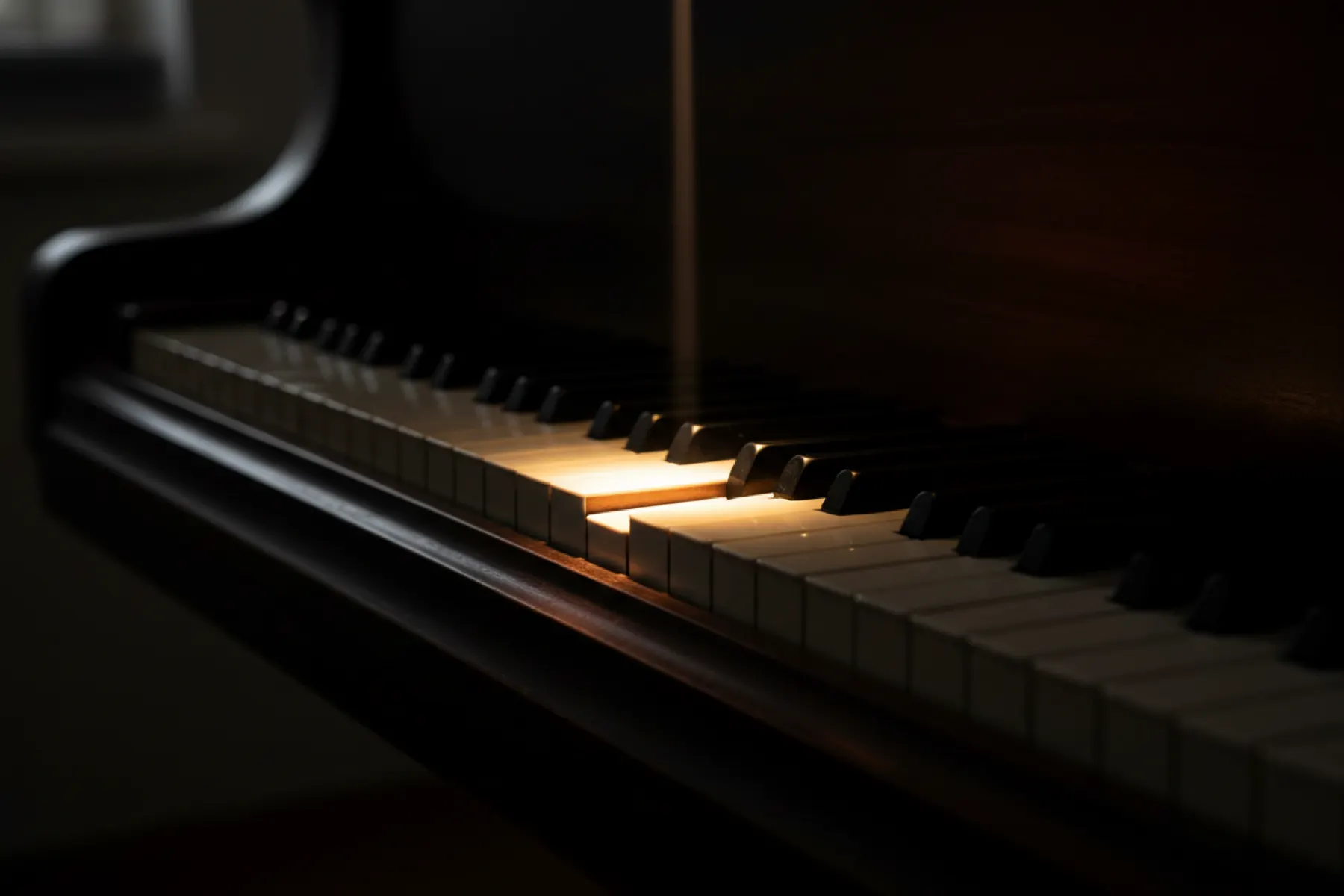
When melody and accompaniment share one hand, the melody sings not because the finger presses harder, but because the arm's weight is directed toward it while the other fingers stay light.
Read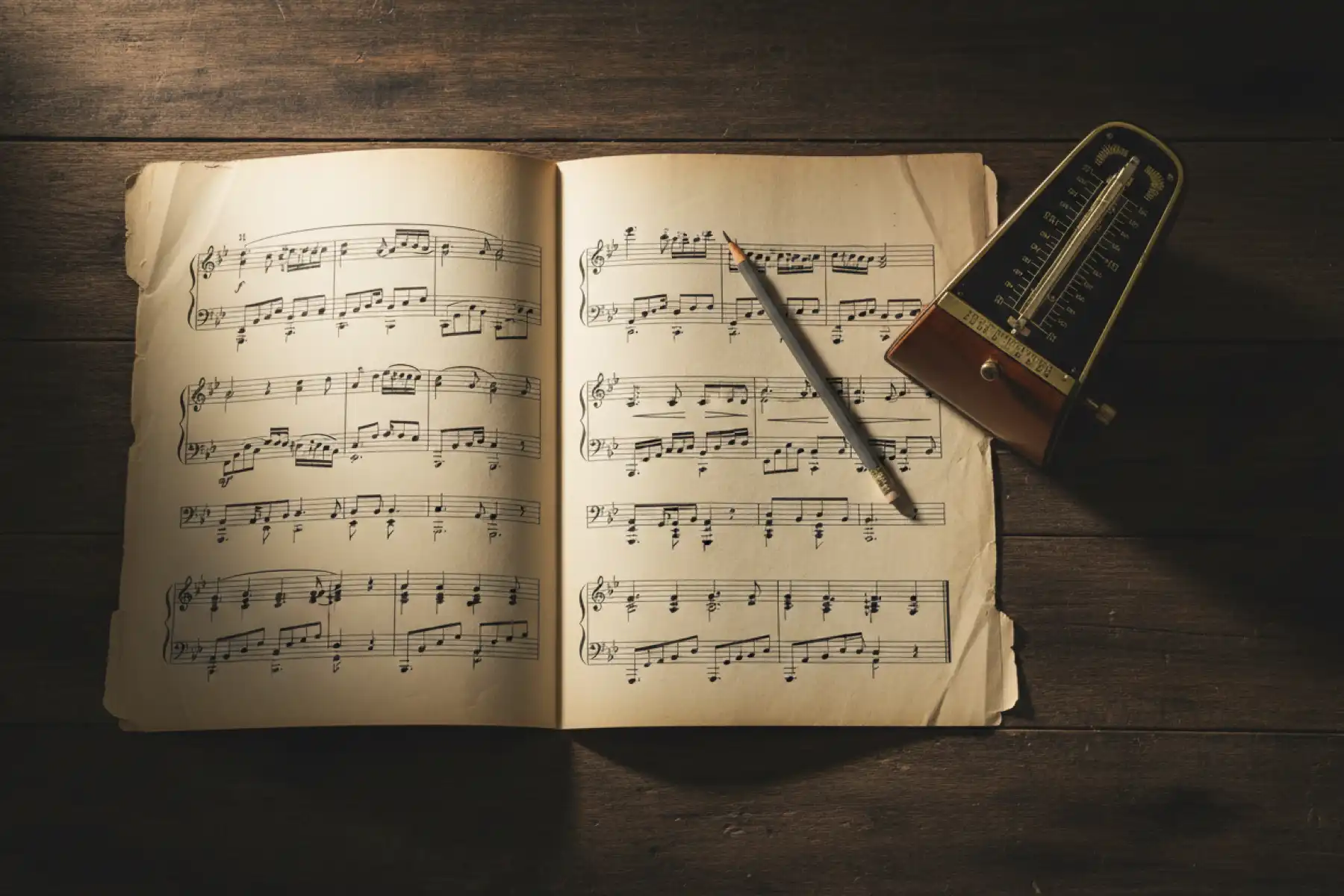
The metronome's most useful job is not keeping you honest about tempo. It is making a coordination problem visible that you cannot quite see at your comfortable speed.
Read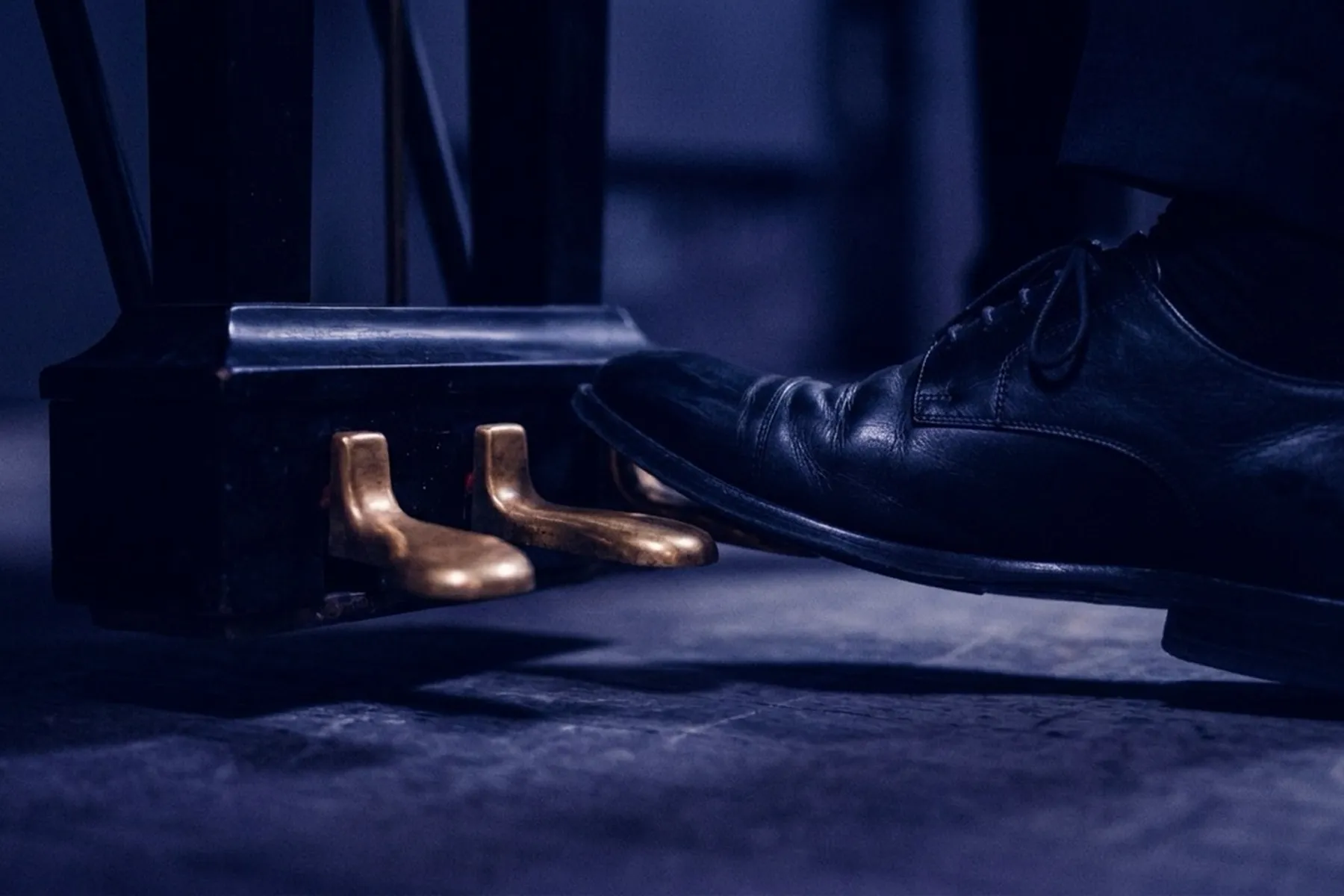
Many pianists learn to pedal by counting. It is a place to start — but a counted pattern is not really listening to anything. The ear hears; the foot follows.
Read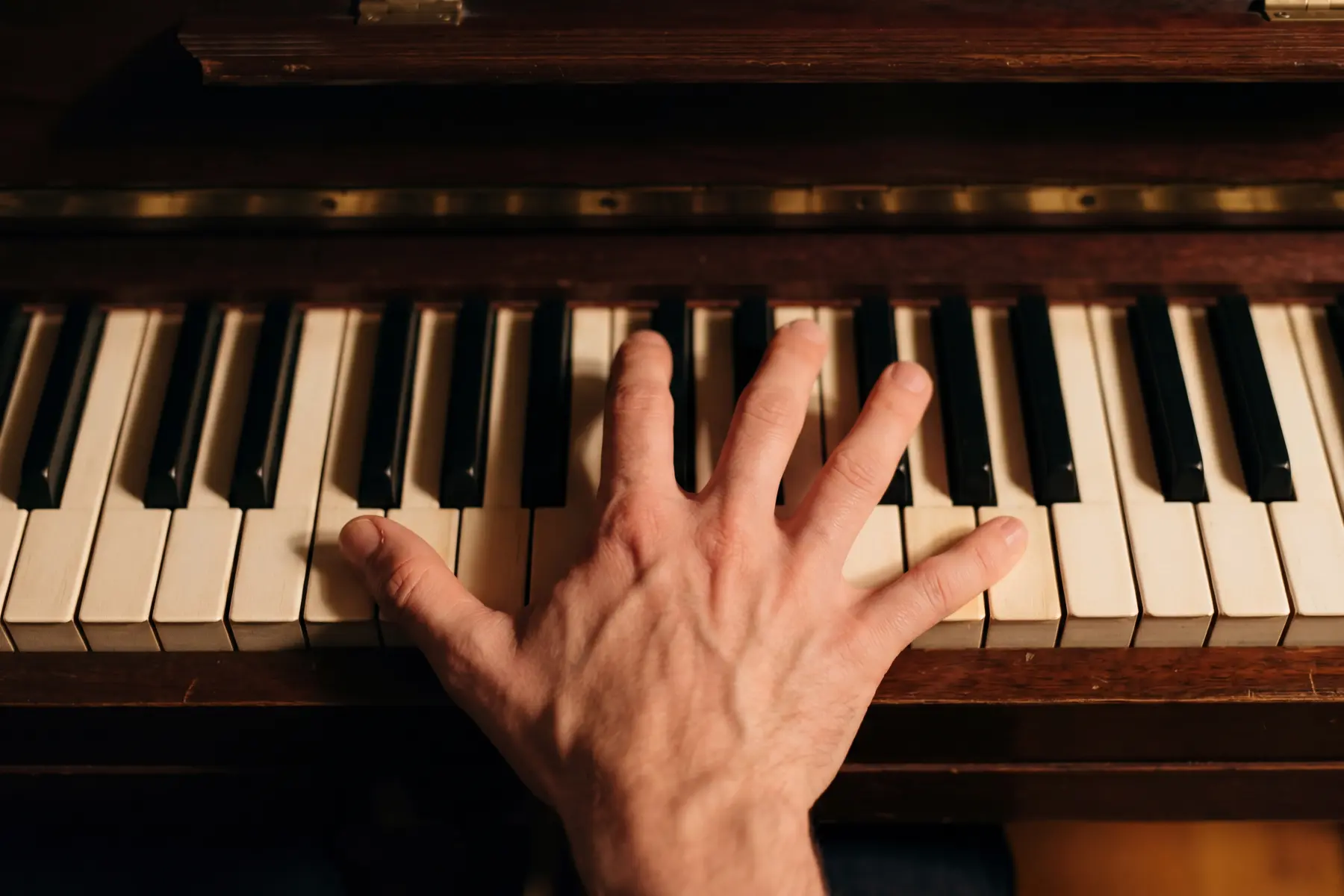
A good arpeggio can sound legato. Not because the hand somehow glues everything together by force.
Read
Many pianists think of a scale as a row of notes with a fingering attached to it. That is already where things start to go wrong.
Read
When you sit down with a new piece, the first read is not just a read. It is already the beginning of your practice plan.
Read
Many students think mostly about how to arrive on a note. But very often, the next problem begins in what happens after the note.
Read