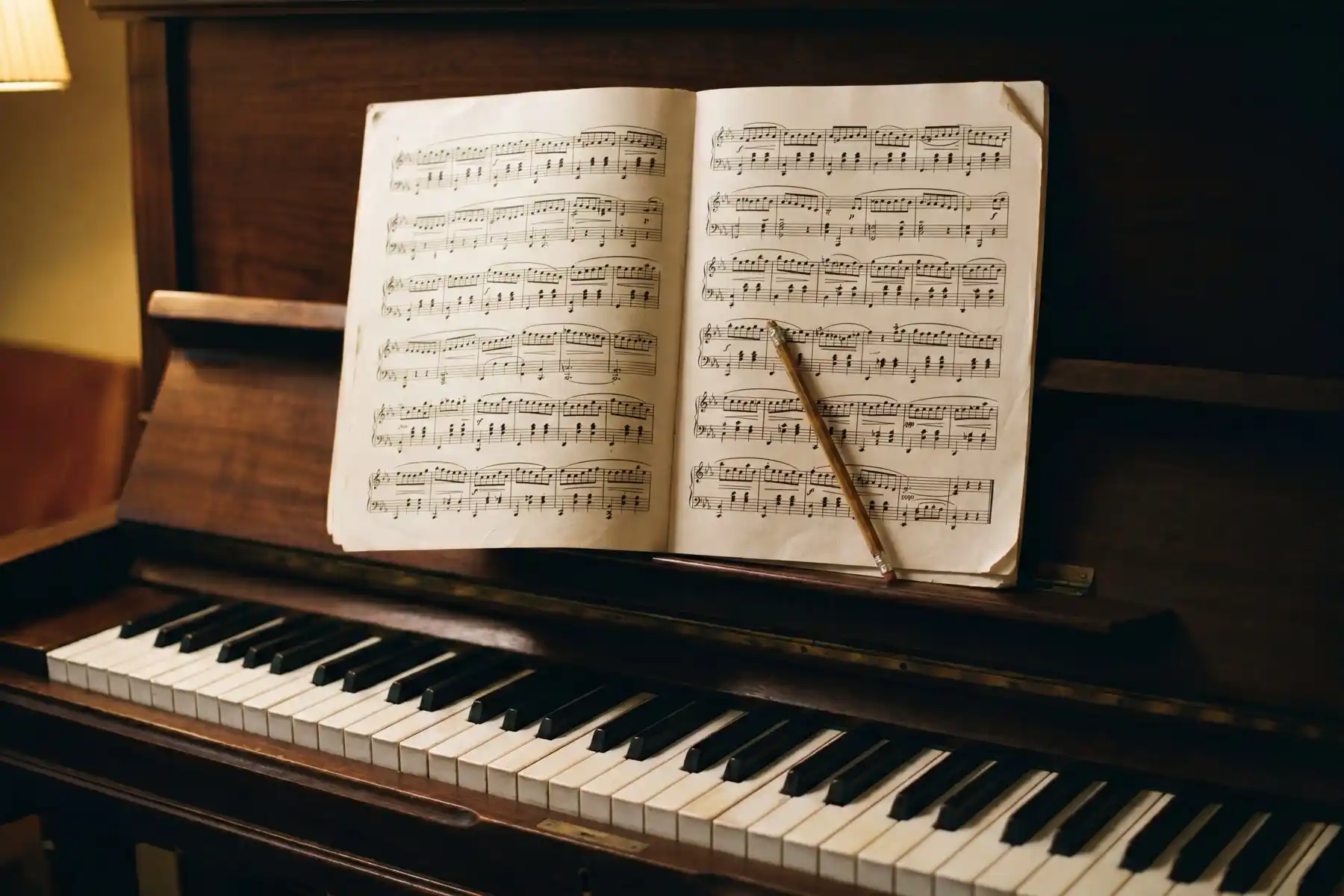
The first time through a new piece is the most information-rich pass you will ever play of it — and it is the one most players spend the worst. The reflex is to start at bar one and play through as far as the hands can manage. It feels like a beginning. It mostly wastes the single pass where the piece is still telling you, in full, what it is going to ask of you.
The first encounter is not a play-through. It is a mapping pass. Done as a map, it turns every later practice minute from blind into aimed.
What Most Players Do on a First Read — and Why It Wastes the Most Valuable Pass
It is worth being precise about why playing through is the costly choice, because it does not feel costly — it feels like progress.
When you read by playing through, all of your attention goes to keeping going: finding the next note, not stopping, surviving the bar. That is the one thing the first pass is least useful for and the one thing it cannot give back. The first read is the only time you see the whole piece with completely fresh eyes — before any section has become familiar, before any difficulty has been hidden by repetition. Spend that pass just getting through it and you have used your clearest view of the terrain to look only at your own feet.
The cost shows up later, lopsided. Without a map, practice drifts to the parts that already feel good — the easy sections get played again and again, the hard ones get postponed, and later quietly becomes much later. A misreading from the first read can keep a passage going wrong for weeks — not because the playing was careless, but because the wrong version had the most repetitions. The piece ends up uneven: one part fluent, another still new and awkward, long after it should be.
The First Read as a Mapping Pass
So treat the first encounter as reconnaissance, not performance. Before any tempo attempt, you are locating four things:
- the structure — sections, repeats, where material returns changed or unchanged
- the hard spots — the places that already look like they will need the most time
- the hand-position groups — where the hand settles into a shape and where it has to relocate
- the fingering decisions — the choices that should be made deliberately, not improvised under pressure later
This is the planning sub-intent of learning a piece, and it is deliberately one piece of a larger method — not the whole of it. The full fastest-way method for learning a piece covers the entire arc; this post owns one part of it: the first read as a planning pass rather than a play-through. Spotting the hand-position groups in that first pass is exactly where grouping notes into prepared positions begins — you see the groups before you ever play them at speed.
Try This — A Reading Pass Before a Playing Pass
Before you start practising a new piece:
- look through the score for two or three minutes without playing — notice sections, repeats, and overall shape
- mark the places that already look harder, before they have a chance to hide
- only then play through it carefully — not as a performance attempt, but as a first exploration
- when you reach a difficult place, do not push through it; slow down and notice what it is actually asking
- write the plan down in one or two lines: where the real work is, and where it is not
Treat the first read as a listening-and-mapping pass, not a finger pass — much of what you are gathering is heard, not played, which is why it works best done the way you would listen while practising: attention on what the piece is doing, not on getting through it.
Why a Mapping Pass Makes Every Later Minute Count
A good first read does not solve the piece. It does something more useful early: it tells you where to spend yourself. With a map, the slow practice that follows is aimed at the places that need it instead of spread evenly over places that do not — which is what makes slow practice efficient rather than blind. Practice without a plan is not lazy; it is just unaimed, and unaimed effort is most of how good intentions turn into uneven pieces. You make the map once, before the real practice work starts; what the mind does while the hands are already playing is a different job, and that one you hold every time you play the piece.
In short: a first read is not a test and not a performance. It is the pass where you map the piece — structure, hard spots, hand groups, fingering — so the work that follows is divided wisely instead of drifting to whatever already feels good.
Inside Piano Fantasy Academy, this way of working is built gradually — from simple exercises to real music — so you learn not only what to practise, but how to recognise the difficult passages early and plan the work before you sink hours into it.