Most students think hard about how to arrive on a note. That is where the attention naturally goes — the landing, the moment of sound. But very often the next problem does not start on the next note at all. It starts in what happened after the previous one.
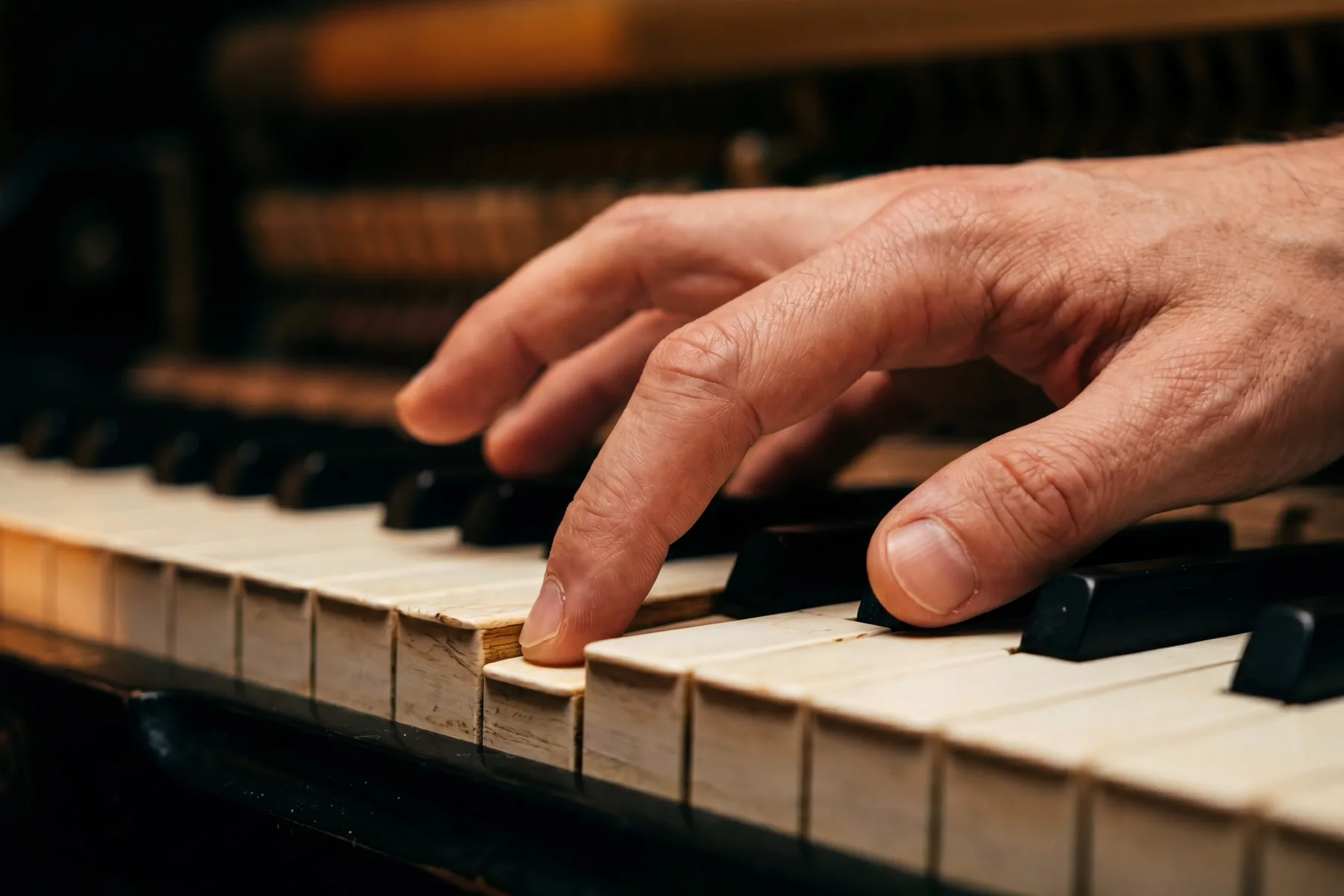
The hand goes down, the key is played, and then everything stays a little too heavy — almost as if the hand is stuck to the key. From there, the line starts to fall apart.
Not dramatically. Just enough that the connection goes and the phrase stops flowing.
Why the Next Note Is Decided Before You Play It
Here is the part that surprises most players: by the time you are playing a note, most of its quality has already been determined. Not by how hard you press it, but by the state you were in when you arrived — and that state was set by how you left the note before.
A good movement does not only go into the key. It also comes out of it in the right way. If the hand stays heavy at the bottom of the key, the next note begins from a position that is already late and already stuck — and there is no amount of effort on the note itself that fully recovers from that.
If the hand leaves the key freely, the next note begins from a position that is already organised. The decision was made one note earlier. This is what piano movement preparation actually means: not getting ready in the abstract, but preparing the next movement physically, in the way you complete the current one. And while the arm is doing this, the mind has to be one note earlier too — a hand that is perfectly prepared still misses the note when the thinking arrives with the fingers.
The Small Wave: Down, Contact, Rise, Arrival
The clearest way to feel this is as a small wave rather than a series of separate presses.
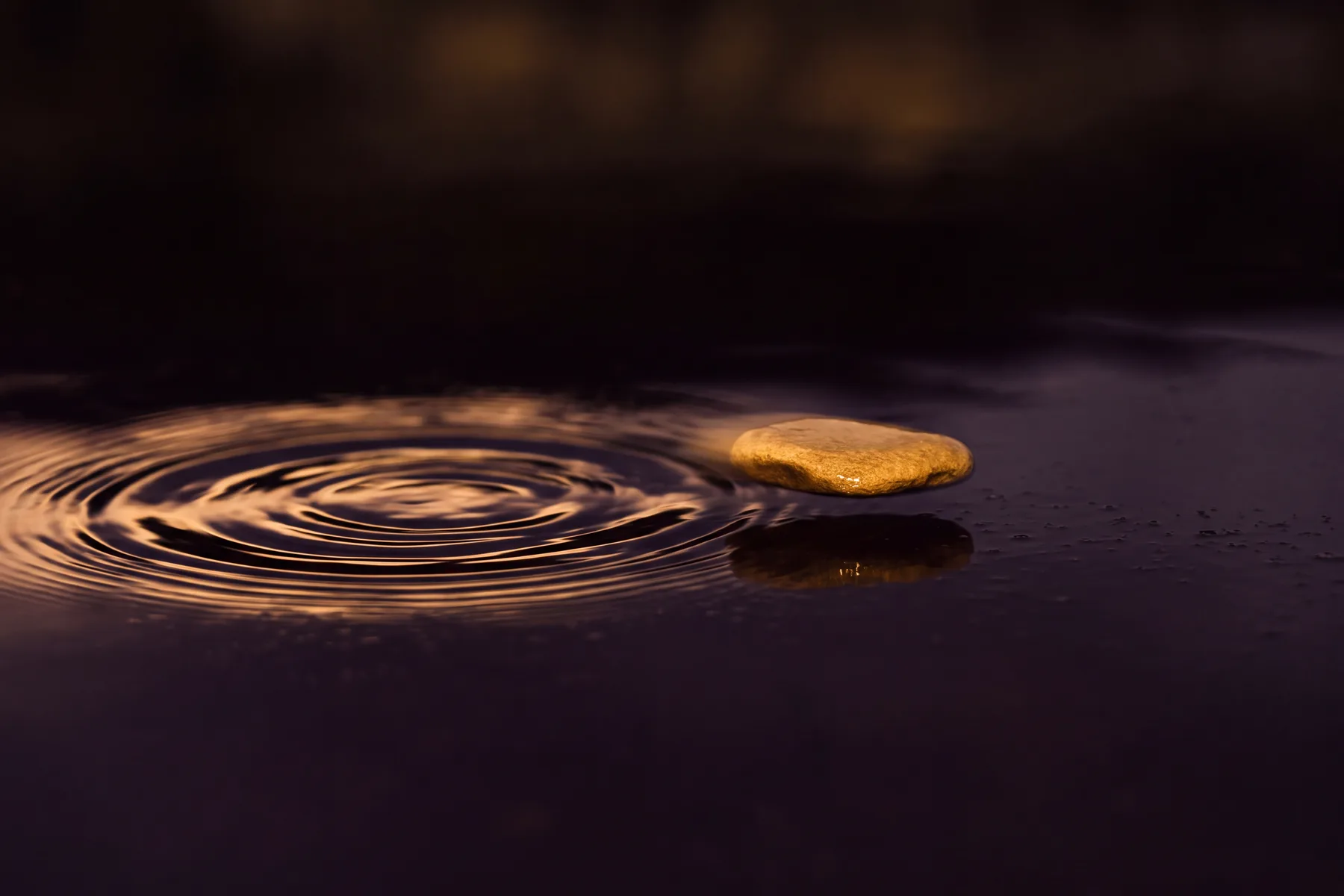
Like a small ball touching the ground, the movement does not collapse and stay down. It uses the contact and rises again naturally. That upward moment is not a separate, extra motion you add. It is the preparation for the next note — the same rise that takes weight out of the key is already carrying you toward where the next note begins.
So the unit is not "press, press, press." It is one continuous shape:
down → contact → rise → next arrival
The drop delivers the sound. The contact is brief and real — you feel the key. The rise is free and is already preparation. The next arrival is the start of the next wave.
Through all of it the wrist stays free and follows the movement; it does not flick, and it does not lead. The motion belongs to the arm; the wrist comes along with it.
Why This Is the Same Skill as Preparing Between Notes — Seen From the Other Side
There is a closely related idea, and the line between them is worth drawing precisely, because confusing the two flattens both.
The companion to this is the preparation that lives in the silent gap between notes — what the arm organises in the space before the next sound. This article is about the forward-looking motion after the note — the way you leave a key, which is what makes that gap usable in the first place.
Same principle, two viewpoints: one looks at the silence between notes and asks what is prepared in it; this one looks at how the previous note is released so that there is good preparation to find there. Together they describe the whole motion. Apart, each is half of it.
This is also why it connects to the rest of the coordination. Leaving the key well is part of the vertical arm movement — the rise after the drop is not decoration, it is the arm getting ready — and it is the coordinated system of arm, wrist, and fingers anticipating the next sound rather than only reacting to the present one.
Try This
Take a simple two-note slur.
- Drop into the first note with the forearm.
- Stay there for a moment and feel the contact.
- Then let the arm rise again naturally.
- From that rising movement, arrive in the next note.
Do it slowly. Not as two separate actions, but as one small wave: down, contact, rise, next arrival. Keep the wrist free — following the movement, not flicking, not leading.
The same forward-thinking applies when the next note is a voiced one: how the following note is set up — which finger, how much weight, how it is left — is decided in this same rise, before it sounds.
Why This Matters More Than It Looks
When the hand stays too long at the bottom of the key:
- the next note starts unprepared
- the movement becomes late
- the phrase loses its natural flow
When the rise is free, the next note is already being prepared, and none of those three things happen. This is not a large or impressive technique. It is small enough that most players never work on it directly — which is exactly why it stays a problem when it is one.
In Short
When the note is played, that is not the end of the movement yet. Very often, the quality of the next note depends on how you leave the previous one. The motion after the note is already the preparation for it.
Where This Is Built Step by Step
This may sound like a small detail, but it changes how you shape and phrase across whole passages — because phrasing is mostly a matter of how notes are connected, and connection is decided in exactly these moments.
Inside the Piano Fantasy Academy this coordination is developed gradually, from simple exercises to real music, so it becomes part of your playing instead of something you occasionally achieve by chance.
You can keep experimenting on your own, or follow a clear path that builds this step by step.