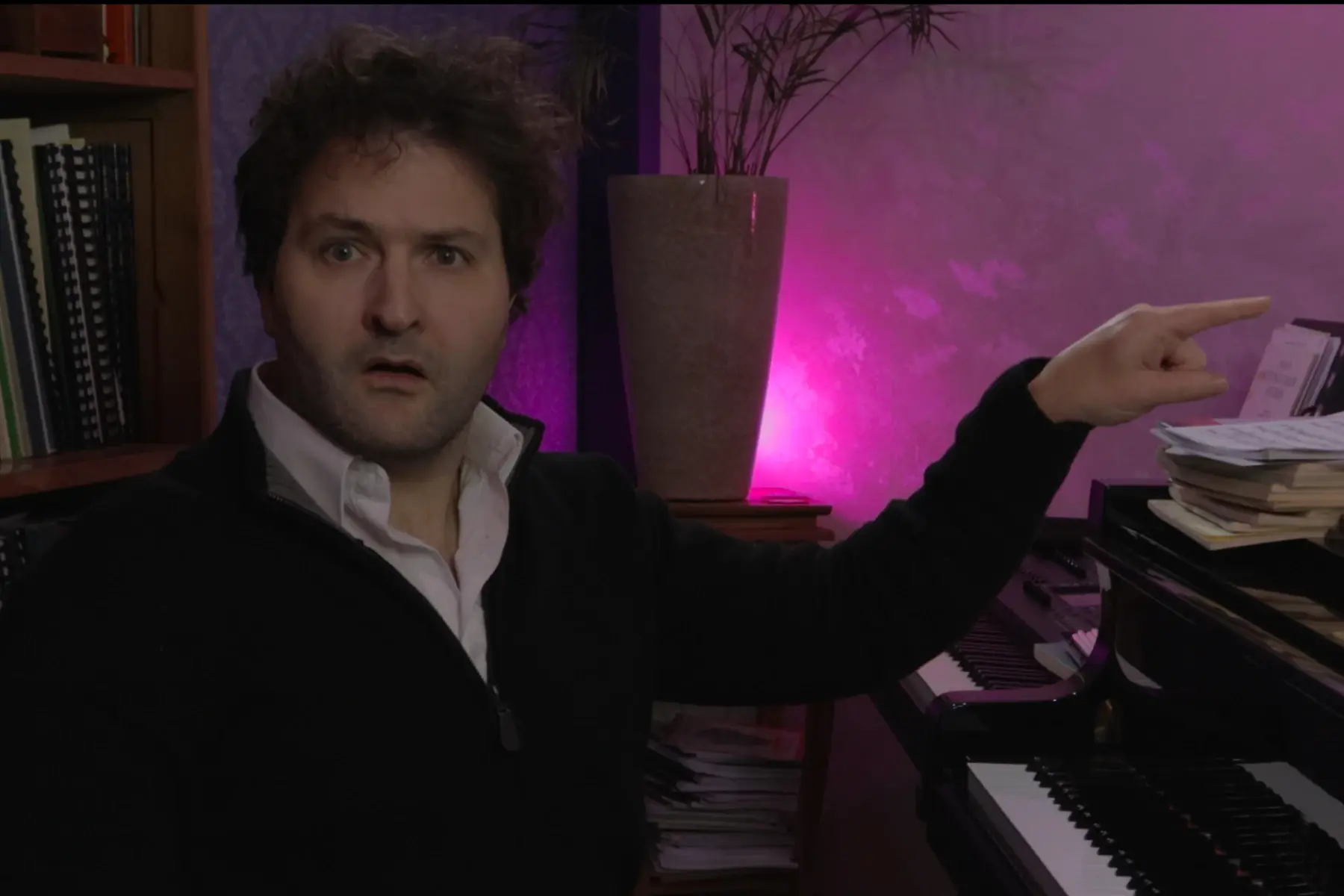
I started to play the piano when I was 15 years old. I didn't know anything about music. I didn't play the piano, I didn't read notes, I really started from zero. But still I made it to go to the conservatory when I was 19 years old.
In less than four years, three and a half years, I learned to play the Fantasie-Impromptu of Chopin, etudes of Chopin, Mozart sonatas, and so on — everything that was needed for my entrance exam. And I did my theory, music theory, solfège. It took a lot of work. But it's possible.
Point one: Fascination. I was fascinated. I listened to musical recordings, because that is an essential part of piano learning. Without listening to other great pianists, you are just working in the blind. When I was listening to a Beethoven sonata, or a Chopin Ballade, when I had just started to play the piano, I was listening to it as music I was going to play myself one day. It made me motivated. And there was zero space for self-doubt.
Point two: Practising hours. You have to practise enough hours. I practised mostly until the later evening. I still felt I had time for doing hobbies. It never felt as a pressure on me — I was really fascinated and enjoyed practising.
Point three: You have to have a plan. You cannot just work blindly.
Point four: Good balance between technique and repertoire. You cannot become an excellent pianist without doing your technical work. I would take a 50/50 division — 50 percent of your time on technique, 50 percent on repertoire. I used to do one hour of exercises, every day. Later one hour of exercises and one hour of etudes. Or half an hour and one-and-a-half hours of etudes.
When I did six hours of practice, and even eight hours, I used to do three hours of technique and three hours of repertoire.
Point five: Take your theory seriously. Theory and ear training and solfège. How can you memorize a piece if you don't understand any chord? How can you remember a melody that you cannot sing? You don't have to sing as the greatest — but you just need to sing as a normal human being can. Because we're all born with the voice.
If these five elements are there, I think you can still become an excellent pianist, even if you started in your teens or even early 20s. Ignacy Paderewski was 24 when he started to pick up piano seriously. And he became in his time the most famous, celebrated, and rich pianist. Talent is not going to save you. But hard work — that is going to be your best ally.
I started piano at 15. I didn't know anything about music — didn't read notes, didn't play anything. I started from zero. In three and a half years, I learned the Fantasie-Impromptu of Chopin, multiple Chopin etudes, and Mozart sonatas, and passed the entrance examination for the music conservatory at 19.
My environment expected me to come back from it. They thought it was a phase. I didn't come back from it. And it was not because I was unusually gifted — it was because five things were in place throughout that time. These five things apply whether you started late or early, whether your goal is professional performance or personal mastery.
1 — Fascination
Without fascination, nothing else works. Hours of practice without fascination are hours of going through the motions — mechanically, joylessly, inefficiently.
I was fascinated. I listened to great pianists play the pieces I wanted to play — not as background music, but as music I was going to play myself one day. When I was just beginning, I would listen to a difficult Beethoven sonata or a Chopin Ballade and hear it as part of my future. That made me motivated. It made practice feel like progress toward something real.
Fascination is not passive. It requires feeding — listening to recordings deliberately, attending concerts, reading about composers and pianists, exploring music beyond what you are currently working on. The fascination has to grow as you grow, or it becomes just obligation.
There was zero space for self-doubt. My environment doubted me; I did not doubt myself. Not because I was arrogant, but because doubt takes energy that practice needs. Self-doubt is a luxury no serious student can afford.
2 — Enough Hours
You have to practise enough hours. There is no way around this.
In high school, I came home at three or four in the afternoon and practised until the later evening. I still had time for hobbies. It never felt like pressure — I enjoyed practising because the fascination was genuine.
How many hours is enough? It depends on the goal and the timeline. When I was preparing for the conservatory entrance exam, I needed six to eight hours per day. When I was at six hours, three hours went to technique and three to repertoire. When I went to seven or eight hours, the extra time always went to repertoire — the technique work stayed at three hours. That ratio held throughout.
At a more moderate pace, two to three hours of focused daily practice is meaningful progress. But focused matters. One hour of genuine concentration — slow practice builds real speed — outperforms three hours of mechanical repetition.
3 — A Plan
You cannot just work blindly.
A plan answers three questions: What am I working on this session? What is the goal of this session? What does progress look like?
Without a plan, you end up playing what you already know, avoiding what you do not, and spending the most time on the parts that feel the best — which are already the strongest. A plan inverts this: it allocates time to what needs work, not what is already comfortable.
My plan in the conservatory years was roughly: one hour of exercises, one hour of etudes, and the remainder on repertoire pieces — with each session having specific technical or musical goals, not just "work on this piece."
The tiny habit that builds progress describes the discipline side of this — the daily decisions that compound over time.
4 — Balance Between Technique and Repertoire
You cannot become an excellent pianist without doing technical work away from repertoire. This is not optional.
I take 50 percent of practice time for technique and 50 percent for repertoire. Fifty percent on technique does not mean scales for an hour and nothing else — it means exercises, etudes, and systematic work on the physical mechanics of playing. Hanon, Brahms exercises, Czerny etudes. One hour of exercises and one hour of etudes — or half an hour and ninety minutes of etudes, depending on the day.
My first teacher was a believer in Hanon and in keeping the fingers close to the keys — no arm movement, all extra movements to be avoided. That approach actually worked against me, because avoiding arm movement is a fundamentally wrong way of playing piano. When I later went to my second teacher, Peter Simons, he taught me how to raise my fingers, how to use my arm efficiently, how to make the arm help the fingers solve pianistic problems. That freed up my playing completely. And then I really started to make rapid progress.
The lesson: technique work is only useful when it is correct technique. One hour of the wrong technique every day makes things worse, not better. Good instruction on technique matters more than the number of hours spent on exercises.
Three good repetitions beat thirty bad ones — the same applies to technique work. Quality of the technical session matters more than its length.
5 — Theory and Ear Training
Theory and solfège are not separate from piano playing. They are part of it.
How can you memorize a piece if you do not understand any chord? How can you remember a melody that you cannot sing? Without the ability to hear the harmonic logic of what you are playing, you rely on muscle memory alone — and muscle memory is fragile. It fails under pressure, in an unfamiliar hall, when something unexpected happens in a performance.
Theory gives you a map. Ear training lets you navigate by that map in real time. Together, they make music easier to memorize, easier to interpret, and easier to learn. They also make each practice session more intelligent — you understand why the harmony resolves there, why the phrasing works that way, what the structure is doing.
You do not have to sing as the greatest singer in the world. You have to sing as a normal human being can — because we are all born with a voice. You should be able to sing a melody. If you cannot, you do not yet know it well enough. Singing is the most honest test of whether you have internalized the music.
Ignacy Paderewski was 24 when he started to take piano seriously. He played a little before, but it wasn't good. And of Paderewski it can be said that he was in his time the most famous, celebrated, and rich pianist in the world — he had a private train for his American tours, and appeared in Hollywood films. So it is not too late, at any age.
But you have to do the work. It does not come by itself — not at 15, not at 24, not at any age. Talent is not going to save you. Consistent, structured, intelligent daily work will.
A broader perspective on the musical life these five things point toward: a conversation on music and painting touches on what it means to develop an artistic identity over a lifetime, not just technical facility. And the technique system behind real playing is the detailed treatment of what the technical 50 percent actually consists of.