In this video we're going to talk about scale etudes by Czerny, Carl Czerny. In the previous videos I was talking about scale technique, but it's also nice to put scales into practice. To put them into real pianistic situations.
What is good about etudes is that it focuses on only one or two techniques. Plus, you can spoil a Czerny etude and you can still sleep at night — but if you would spoil a Sonata by Mozart, or some nice piece of Chopin, just for the sake of practice, and struggle with it a lot, then you start to get an aversion to it. That would keep me awake at night! But not a Czerny etude.
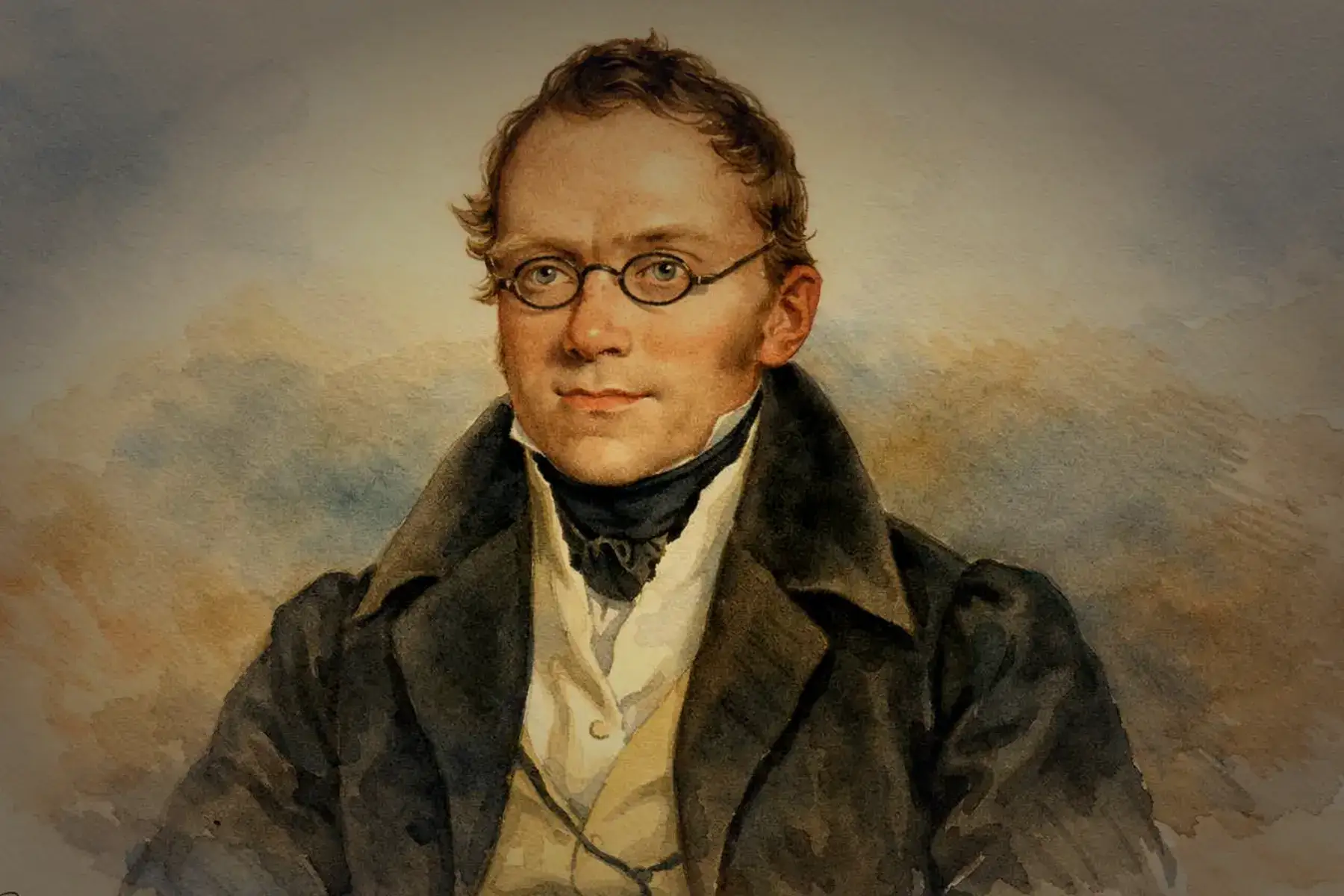
Czerny was the student of Beethoven. He premiered several works of Beethoven, including his first piano concerto. He was since he was 14 years old the most sought-after teacher in Vienna. He had really hundreds of students and a few famous ones. The most famous one is Franz Liszt. He learned all his fundament of piano playing from Czerny. Also Theodor Leschetizky was a student of Czerny — the teacher of a whole army of great pianists in the late 19th and first half of the 20th century.
I see a nice link there to me with Czerny: Beethoven was teaching Czerny, Czerny was teaching Franz Liszt, Liszt was teaching Tausig — the most virtuosical student of Liszt, the Horowitz of the 19th century. Tausig was also the teacher of Barth, and Barth was the teacher of Arthur Rubinstein, and Arthur Rubinstein was teaching my teacher Avi Schönfeld. A nice link.
Dinu Lipatti called him, not without reason, "father Czerny."
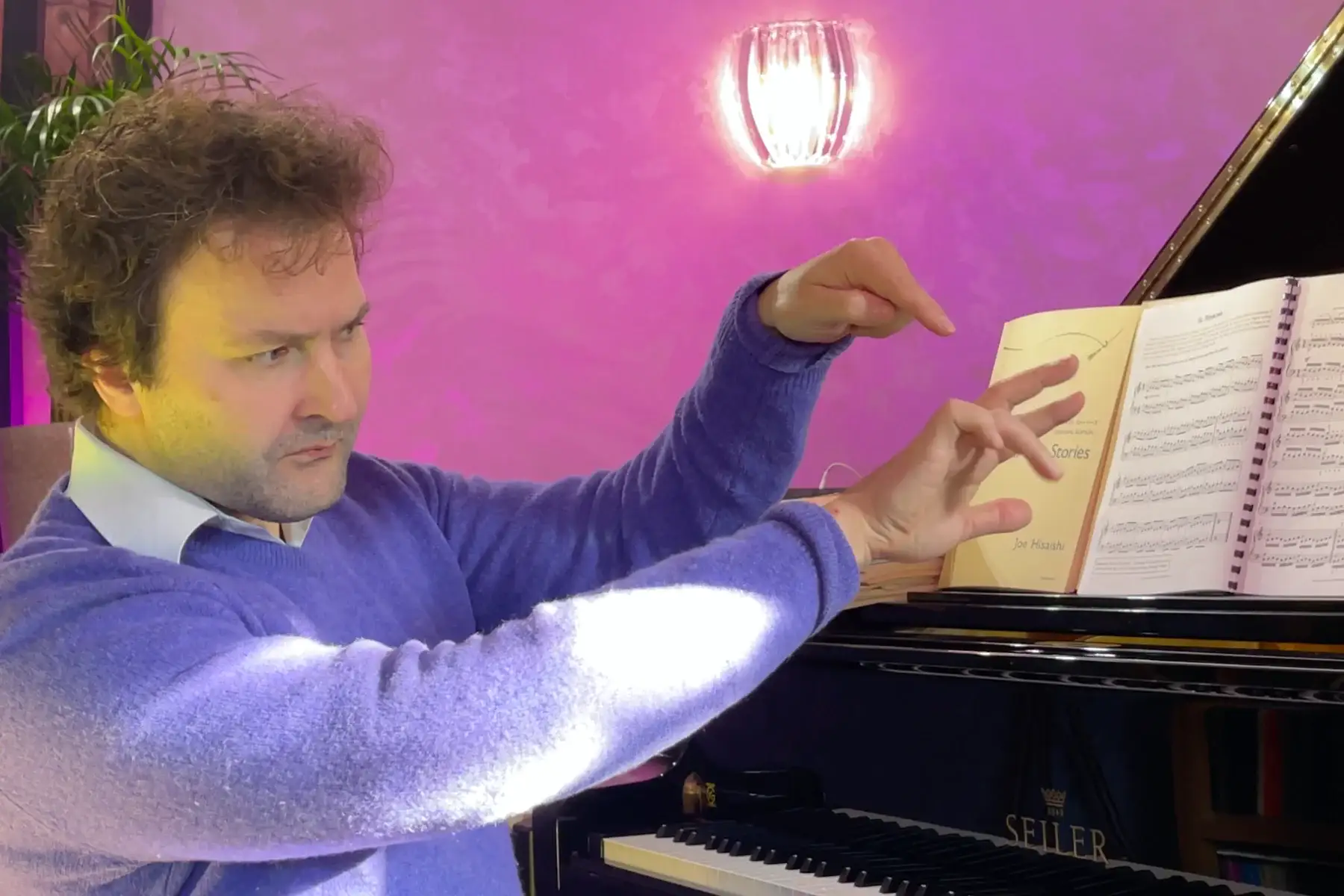
My number one tip for learning any etude — and in fact any difficult passage: the umbrella technique. Open the hand and articulate the fingers very well. A special way of working that really can effectively develop finger independence, finger strength, and finger speed, while we work in a slow tempo. Open the hand. Fast attack, fast and speedy strike of the key. And there is a relaxation in the muscles between each note.
Horowitz said he advises every pianist to play the first etude of Chopin, Opus 10 No. 1, very slowly and strong. Every day! That is the first-phase exercises with the umbrella technique.
Carl Czerny is the bridge between finger exercises and real repertoire. He gets dismissed sometimes, usually by people who have played him mechanically and found the experience dull. But Czerny is not mechanical in the sense of being empty — he is focused. Each etude isolates one or two techniques, and that isolation is exactly what makes them useful.
You can spoil a Czerny etude and still sleep at night. If you approach a Mozart sonata or a Chopin piece as an exercise — struggling through it, grinding passages, losing the music in the process — you build an aversion to it. That piece becomes difficult to love again. A Czerny etude does not carry that risk. You can work on it hard, technically, without endangering anything precious.
Dinu Lipatti called him "father Czerny." That is not a dismissive label.
Why Czerny Matters
Czerny was Beethoven's student. He premiered several of Beethoven's works, including the Piano Concerto No. 1. Beethoven himself considered him a serious student, and their relationship lasted until Beethoven's death in 1827.
After his studies with Beethoven, Czerny became at age 14 the most sought-after piano teacher in Vienna. His most famous student was Franz Liszt — who got all the fundamentals of his piano playing from Czerny. Theodor Leschetizky was also a Czerny student, and he later became the teacher of a whole generation of great pianists in the late 19th and early 20th centuries.
The Beethoven → Czerny → Liszt → Tausig → Barth → Rubinstein line is the direct lineage of the technique tradition that runs through my teacher Avi Schönfeld. So when I work with Czerny, I am working in the same tradition that shaped the greatest pianists of the modern era.
That is the historical argument. The practical argument is simpler: Czerny was a genius at solving problems in piano playing. He wrote more than fifty etudes, organized across multiple opus numbers, each targeting a specific pianistic situation. There is a Czerny etude for almost every technical challenge a developing pianist faces. Practising them with intent using the same approach that applies to Hanon extracts all of that value.
How to Practise Any Etude Effectively
Before going through the etudes by opus number, one technique applies to all of them: the umbrella technique.
Open the hand so the fingers are in a prepared position over the keys. Then strike fast — a speedy, decisive attack. After the key goes down, the finger lifts back immediately to the prepared position. The tempo is slow. The finger movement is fast.
This is how great pianists prepare for performance. Horowitz said he advises every pianist to play the first Chopin Etude (Op. 10 No. 1) very slowly and strong. Every day. That is the umbrella technique applied to advanced repertoire. The same method works on Czerny at every level: slow tempo, active fingers, fast attack, discrete relaxation between notes.
The system behind superfast fingers explains why slow preparation is what builds actual speed.
The Etudes: From Easy to Difficult
Czerny wrote so many etudes that navigating them requires a map. Here are the main opus numbers for scale technique, roughly in order of difficulty.
Opus 139 — 100 Progressive Studies
The simplest. Very short pieces, only two lines each. You can choose your own tempo. Every beginner can manage these. Good for establishing the physical fundamentals without being overwhelmed by notation demands. Play them slowly, raise the fingers, feel the lower-arm muscles working.
Opus 599 — Practical Method for Beginners
From these 100 etudes, around 19 numbers are specifically designed for scale technique (Nos. 19, 22, 26, 27, and similar). In China, teachers sometimes use Op. 599 as a complete method — working from No. 1 to No. 100. That is not how I would use them, but the scale-specific numbers are worth selecting and working through in order of difficulty.
Opus 861 — 30 Progressive Studies
Four etudes for scales here, at an easy-to-intermediate level. Notable: all the etudes in this opus are for the left hand. If your left hand is weaker (as it usually is), Op. 861 is valuable targeted work.
Opus 718 — 24 Studies for the Left Hand
Not the most difficult, but effective. No. 8 is a staccato etude — a little arm movement on each note combined with fingers. Worth including specifically for staccato scale work, which appears in Beethoven sonatas constantly. If you want to play Beethoven's sonatas, you should not dismiss Czerny.
Opus 299 — The School of Velocity
The most famous Czerny opus. Two to four pages long, intermediate to advanced. These become genuinely difficult when played at real speed. If the first number feels manageable, the later ones in the book will challenge you significantly. This is the right opus to work through once Opp. 139 and 599 feel natural. How to practise piano scales covers the thumb mechanics and hand-position adjustments that Op. 299 demands.
Opus 740 — The School of Finger Dexterity
Popular in conservatories alongside Op. 299. Similar difficulty, slightly longer pieces. No. 13 is particularly interesting — scales played almost like an embellishment, light and elegant, not mechanical at all. Some people think all Czerny is mechanical. No. 13 is the counterargument.
Opus 335 — The School of Legato and Staccato
Two etudes here (Nos. 2 and 18) focused specifically on articulation contrasts. How to use the arm in fast legato scales; how to combine fingers and arm in staccato work depending on the sound required. Beethoven uses staccato scales constantly in his sonatas — this opus prepares you directly for that.
Opus 399 and Opus 365 — Advanced and Virtuoso Level
Opus 399 (School for the Left Hand) is long and difficult. Opus 365 (School of the Virtuoso) is not long but repeats many times — 12 or 20 repetitions per variation, building stamina as much as technique. Both are conservatory-level.
Opus 409 — The School of Perfection
The most difficult. Hard to find in print; the free PDFs are the practical access point. Nos. 1, 18, and 42 are the scale-specific entries in this opus.
Exercises for weak fingers address the same muscle groups that Czerny develops, from a different angle. And once the Czerny etudes start to feel familiar, the next natural step is applying the same slow-practice precision to real repertoire — Für Elise is where many players make that transition. The Czerny in them will already be doing its work.